Dear melomaniac, this week I decided to return to the magic of electronic music, the kind of music I might love the most. But not just any kind of electronic music—these days, the genre is full of countless examples—so I’ll rather focus my attention on the classic electronic style, as it was shaped years ago by legends like Jean-Michel Jarre, Kraftwerk, Vangelis, Klaus Schulze and of course, the iconic Tangerine Dream, whom I’ll talk about today.
“Recurring Dreams” is one of the band’s newer albums, released in 2019. Interestingly, the album isn’t made up entirely of original, new content. Instead, Recurring Dreams serves as a kind of musical memoir, crafted by the current members of the group in honor of Edgar Froese, the founding member of Tangerine Dream since the 1960s and the only one to remain continuously and persistently involved in the project until the end of his life.
Froese was a true musical genius, the driving force behind every Tangerine Dream record, the power backing the band throughout all these years, and a legendary figure in the world of electronic music. That’s why those who remained after Froese’s passing—Thorsten Quaeschning, Hoshiko Yamane, and Paul Frick—looked back into Tangerine Dream’s musical history and selected the most outstanding themes from nearly every era, reinterpreting them in a modern key on this extraordinary album called Recurring Dreams.
My own connection with Recurring Dreams happened in an unexpectedly interesting way. You probably wouldn’t guess what I’m about to share. Perhaps many of you reading these lines once played Grand Theft Auto V, the phenomenal game released years ago by Rockstar Games. Below, I’ve included an image from this fascinating game:

Well, I’m also one of those who have played it with pleasure on multiple platforms—on PlayStation 3, on Xbox One, and more recently, on Xbox Series X. Of course, at some point you begin to question the level of violence this game is capable of, but ultimately, the beauty of this game lies precisely in its simulation of real life: you can do whatever you want in this game. For me, rather than causing destruction or shooting, the true value has always been the freedom of choice—the pleasure I find in exploring America through the lens of this game, which is the path I choose among the multitude of activities it offers. Even though I’ve never actually been there, the sensation of experiencing America through this game is incredibly strong. Games like GTA 5 allow us to travel to places we might never reach in real life.
You might ask, “Alright, but what’s the connection between Recurring Dreams and GTA 5?” That’s a perfectly legitimate question. Well, I’ve always been completely fascinated by the soundtrack of this game—and I don’t mean the radio stations available in-game, but the actual score: the music that plays on the menu, during the cut-scenes, and so on. This is where the album’s relevance to the game comes in.
I remember being completely in love with a musical piece that I heard all the time in this game—it stayed deeply embedded in my heart. I’m talking about the music that plays when you pause the game and see the map, the map of the fictional city “Los Santos”:
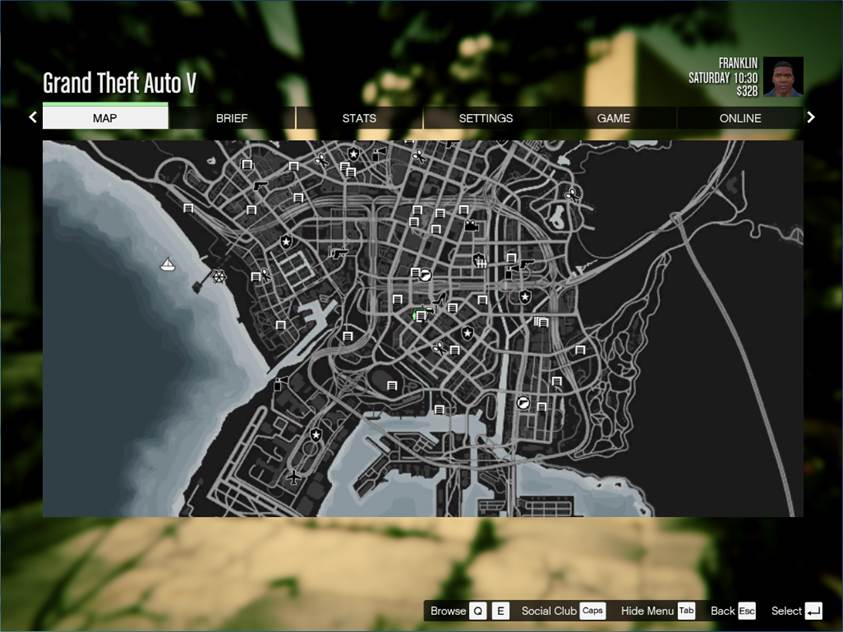
The piece that played here had a unique finesse, a distinct musicality, and a beautiful bass, lingering vividly in memory. Many times, I would pause the game just to let this track loop for tens of minutes.
Years passed, but I hadn’t forgotten that track. I’d always been a Tangerine Dream fan, listening to their old albums over and over, but I hadn’t realized the connection between the GTA 5 map music and TD. I was about to discover it—and be amazed.
When Recurring Dreams was released in 2019, I immediately set out to listen to it in my own way: at night, with all the lights off, a mug of tea or a glass of Beaulieu rum in hand. As soon as I pressed play, I was struck by an incredibly crisp sound, unlike older Tangerine Dream albums—RD benefits from the richness of modern sound. Musically, I was astonished to hear familiar themes from TD, tunes I knew so well.
I instantly fell in love with Recurring Dreams; the tracks flowed one after another and I was completely enchanted by its marvelous soundscape. Yet, my greatest surprise came when the album reached its seventh track.
Suddenly, I heard my favorite GTA 5 track—the one that plays when you pause the game! I couldn’t believe it. I jumped off the couch, turned on the lights, and checked the album listing. Next to track seven, it read: “Los Santos City Map.”
I was stunned and immediately started reading up on it. Sure enough, Wikipedia confirmed it: Tangerine Dream had composed a good part of the GTA 5 soundtrack—what a revelation! Now everything made sense. I understood why I had loved this soundtrack so much and why it possessed such refinement.
The liaison between GTA 5 and TA is truly fascinating: apparently, Edgar Froese at first firmly rejected the proposal to contribute to the game’s soundtrack. Yet after visiting Rockstar’s studios and gaining a better understanding of the project, he changed his mind and accepted. Within a few months, Froese and Tangerine Dream produced 62 hours of music for the game. Over eight months, they recorded in both Austria and the United States.
The GTA 5 soundtrack isn’t exclusively TD’s work; it was a collaborative effort with Woody Jackson, The Alchemist, and Oh No. In a way, Woody Jackson acted as the project lead, but by his own admission, Tangerine Dream’s involvement elevated the soundtrack to a new level.
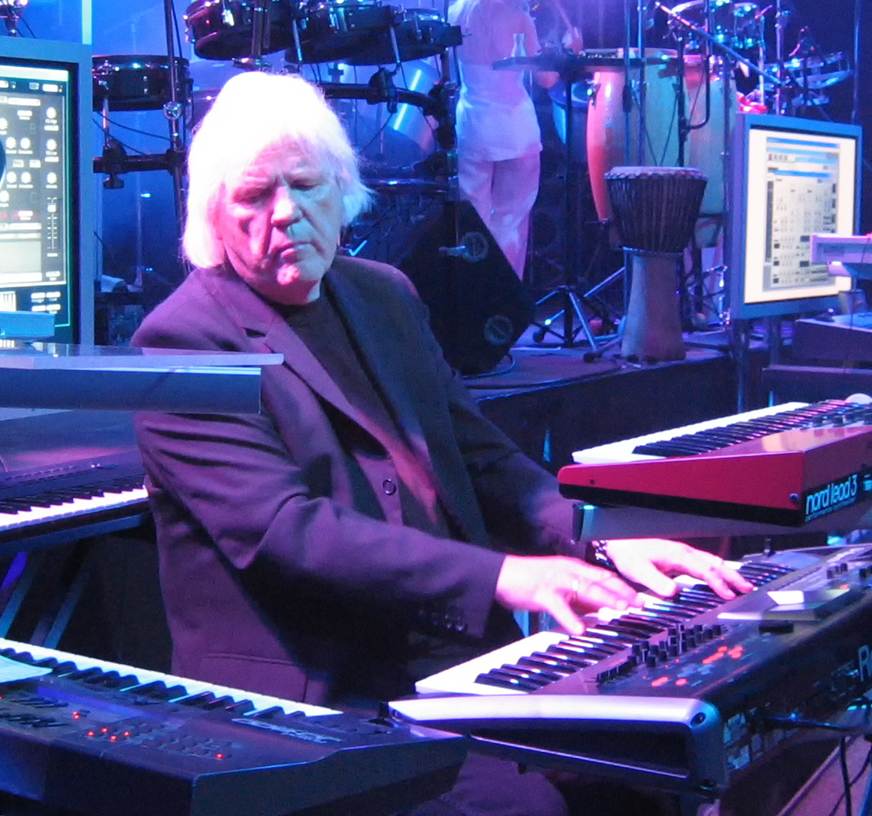
Tangerine Dream was formed in Germany in 1967. Its principal founding member—and, as I mentioned above, the driving force behind the group—was Edgar Froese. The lineup changed constantly over more than 57 years of activity, but one person remained active from the start until his death in 2015: the magnificent Edgar Froese. Here’s a photo of Edgar from 2007:
Froese was born on D-Day, 1944, in a small East Prussian town called Tilsit, now renamed Sovetsk and part of Russia. His family moved to Berlin after suffering persecution by the Nazis. It was in Berlin that Froese began his musical journey, initially diving into the psychedelic rock scene that was so popular at the time. An unexpected encounter with Salvador Dalí, during a visit to Dalí’s home in Spain, inspired Froese to seek a deeper artistic path and venture beyond the conventions of psychedelic rock. This inspiration led to the birth of Tangerine Dream, with Froese recruiting fellow musicians for the project immediately after returning to Berlin from Spain, carrying with him Dalí’s creative influence. Froese passed away suddenly in Vienna in 2015. His parting words remain with us: “There is no death, there is only a change of our cosmic address.”
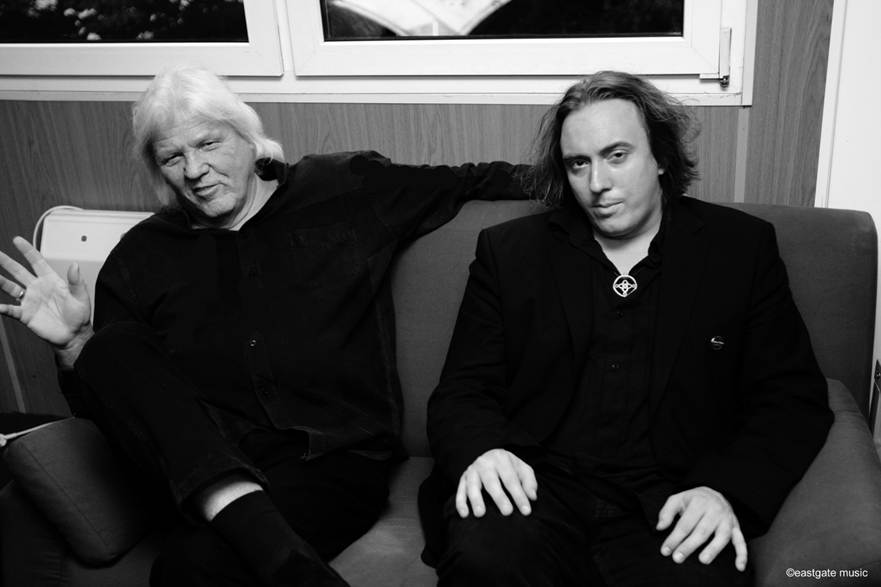
The Tangerine Dream line-up for this album is, of course, different from the original and, sadly, does not include Froese. Froese personally chose Thorsten Quaeschning as his successor, believing him to be the worthiest to carry on the spirit of Tangerine Dream. Below is a photo of the two, Edgar on the left and Thorsten on the right:
Thorsten joined Tangerine Dream in 2005, ten years before Froese’s passing. The last album from the band that included Froese’s concept, and approval was Quantum Gate (2017), and the first album released after Froese’s death—without his contribution—was Recurring Dreams.
So how could the new Tangerine Dream lineup best honor the genius of Edgar Froese and the legacy of TD beyond a compilation album? The concept behind Recurring Dreams is fitting as the first album after Froese’s departure, and it fully recognizes Thorsten’s role as successor. The tracks on Recurring Dreams are familiar from the band’s history, but they are reinterpreted with a modern flavor that once again shines spotlight on TD. I foresee many great years ahead with new and exciting albums. It’s worth noting that, as of now (2024), Tangerine Dream has released 84 albums over more than 57 years of activity.
Below is an image of the band’s current lineup: Thorsten Quaeschning, Hoshiko Yamane, and Paul Frick:
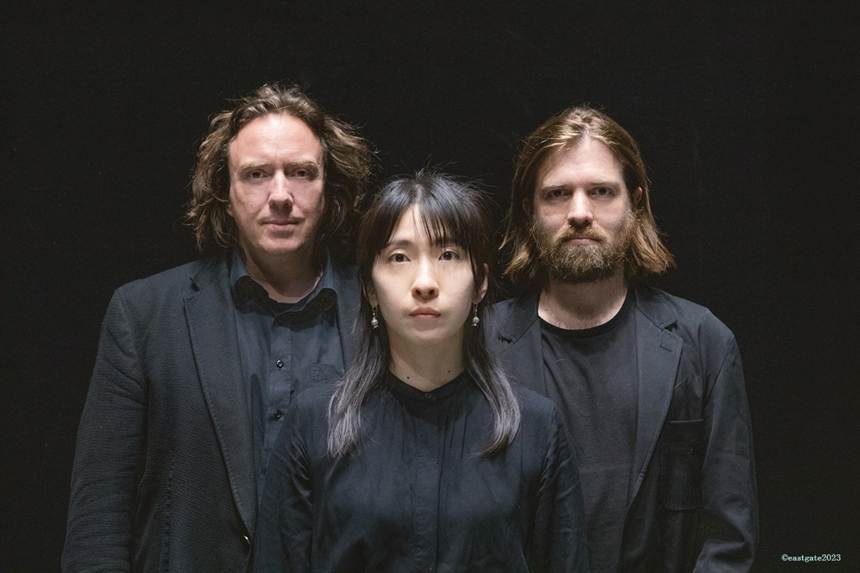
For this album, Thorsten played keyboards, synthesizers, guitars, and drums; Hoshiko contributed violin, viola, cello, and Ableton Push; while Paul handled keyboards, synthesizers, sequencer, and Ableton.
I am truly amazed by how many musicians have passed through Tangerine Dream in these 57 years—artists who have worked together as if in a “musical hive,” like bees, each bringing their unique contribution but always returning to Edgar Froese’s vision. That’s why Tangerine Dream’s works have stayed so aligned over 84 albums and across nearly six decades. To all of this, I offer just one word in response: PHENOMENAL!
Thus, Froese’s timeless dream continues. The new lineup has managed, through Recurring Dreams, to pay a special tribute to Tangerine Dream’s classic compositions.
Now, as I reach the end of this article, I reflect on how this album begins—the feeling is always that I enter a universe of ever-growing progression, expanding and expanding until the universe opens before me, revealing its vastness. The musical progressions and the mathematics of the arpeggiators and synthesizers on this album are, for me, truly unique. All I wish is that I have awakened your curiosity for this album, and for the infinite universe behind the music of Tangerine Dream as well.
Silviu TUDOR
An article written in my sweet spot,
and this is what I’ve heard.