
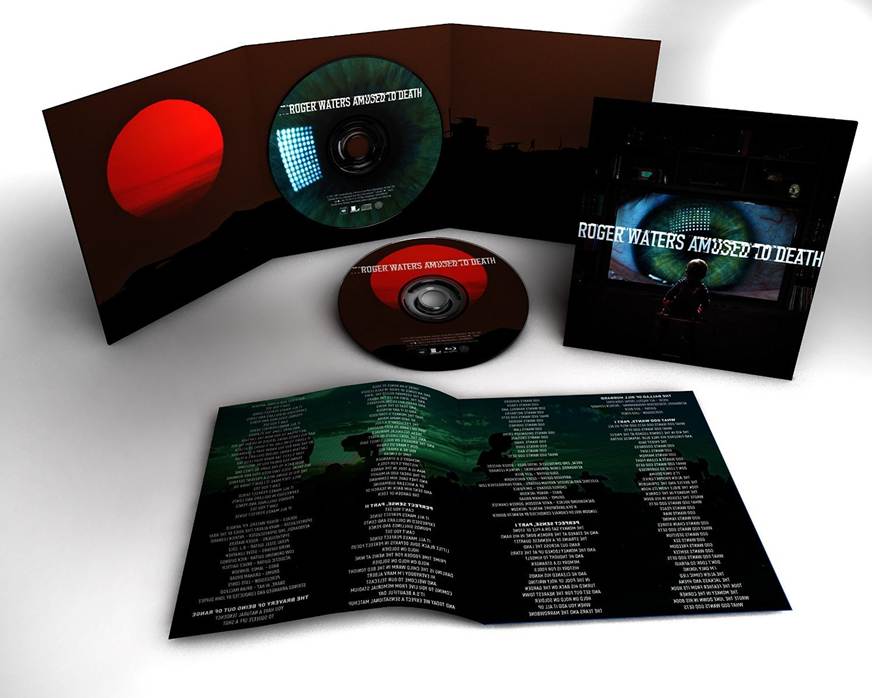
Dear melomaniac, this week it is time for a truly legendary album, a genuine bridge between satire and prophecy – Amused to Death was released in 1992 and became the third solo album of the prolific Roger Waters, founding member of the mega-band Pink Floyd. Following his tense split from the band, Waters continued his artistic journey in a far more personal direction, deeply shaped by themes such as media manipulation, war, and the moral decay of modern society.
Amused to Death is truly a special album. I remember that when I first listened to it, I remained “stuck” for several minutes. I could not understand what I had just heard – social satire? audiophile experiment? political protest? radio documentary? In the end, I concluded that I had listened to music, even though, when it comes to Amused to Death, sometimes it is difficult to say such a thing.
This is one of the very few albums that transcends musical boundaries, far beyond simple musical notation, becoming, in fact, all the things I mentioned in the previous paragraph. It is perhaps Waters’ most conceptual and prophetic solo album. At its core, Amused to Death is a bitter meditation on media, manipulation, and the death of the human spirit in the television era.
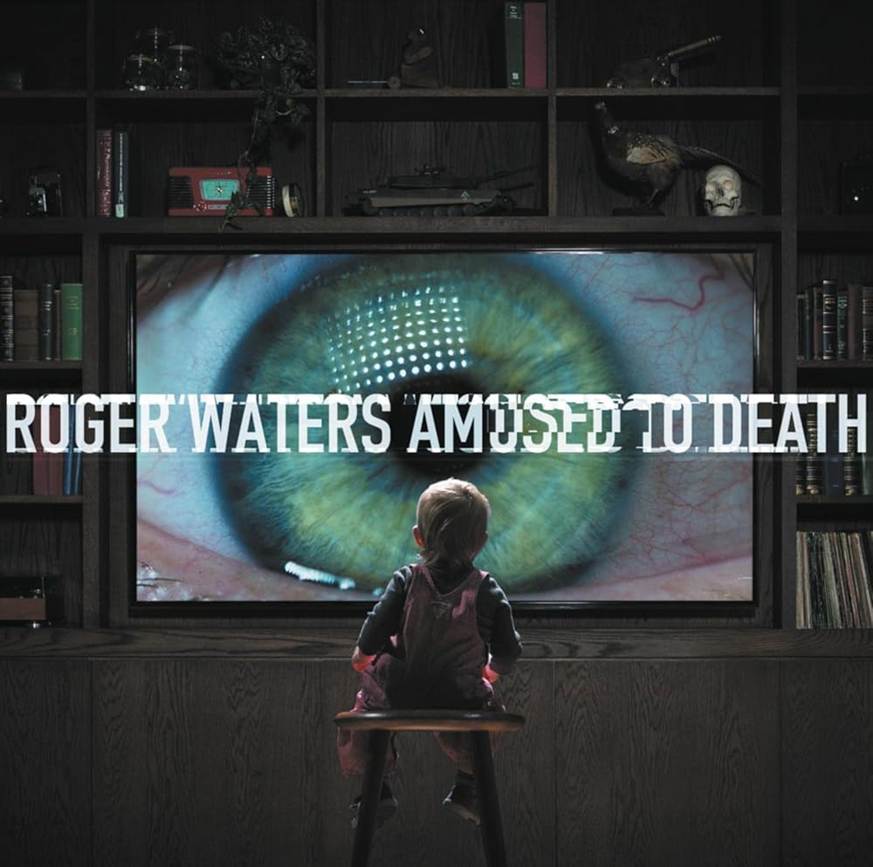
Equally important is the sound of this album, something capable of surprising even less experienced listeners. The album’s mix and mastering are entirely unique, making use of a breakthrough technology from the early ’90s called QSound, which is precisely the reason why this album sounds the way it does. A few paragraphs later I will return both to the sound of the album and to QSound itself.
Until then, however, I turn my attention toward the context in which Waters came to create this record. By 1992 he already had two solo albums behind him – The Pros and Cons of Hitch Hiking (1984) and Radio K.A.O.S. (1987), albums unfortunately misunderstood by the mainstream audience. After this, his solo career needed an iconic release, one that would truly make waves and remain in history forever. That moment finally arrived with the release of Amused to Death, an album considered by many to be the true successor for The Wall.
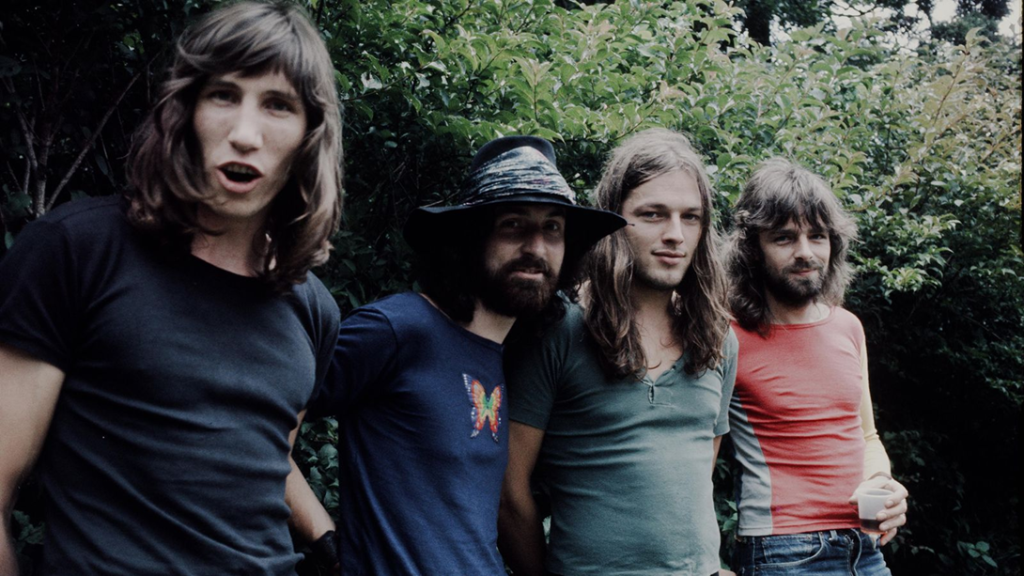
To give you a bit of context surrounding Amused to Death, I should mention that in 1983, following the release of The Final Cut, Roger Waters left Pink Floyd, accusing the remaining members – David Gilmour, Nick Mason and Richard Wright – of becoming too commercial and stripped of meaning. What followed was a long and difficult legal battle over the Pink Floyd name, a battle that Waters ultimately lost. He was convinced that the band would not continue without him, yet, perhaps, the pain became even greater when he realized that the remaining members carried on releasing albums.
The context surrounding his departure from Pink Floyd was undoubtedly painful for Waters, but it must also be acknowledged that it gave him complete artistic freedom, allowing him to create entirely without compromise. This is perhaps the first defining trait of this album – an unleashed Waters.

The second important piece of context would be the Gulf War, unfolding in full force at the end of the ’80s and beginning of the ’90s, precisely when Amused to Death was conceived. The war, combined with the new “glass weapon” – television – which Roger Waters described as an extraordinary evil for humanity, something that dulls and manipulates us, became a direct source of inspiration. Waters famously stated: “We watch war like entertainment.” From here also comes the title of the album – “Amused to Death.”
Isn’t it fascinating that the things Waters observed at the end of the ’80s feel more relevant today than ever before? How does it feel now, in 2026, when we turn on the TV and watch news reports from war zones? The presenters often carry a strange kind of enthusiasm, almost inviting you to throw a bag of popcorn into the microwave and sit on the couch in suspense, as if you were watching an action series episode. Sad, isn’t it? Humanity sits on the couch, popcorn in its arms, watching the news, watching wars, amused to death. This was the central idea behind the concept of Amused to Death, and I repeat, it feels more relevant than ever in 2026.
This concept, according to which television transforms every piece of information into entertainment, did not belong entirely to Waters. He drew inspiration from Amusing Ourselves to Death by Neil Postman, published in 1985, an essay that proposed precisely this idea. Waters borrowed the concept and expanded it into something deeper and more resonant through a lyrical and sonic manifesto so characteristic of him. The social message of this album was extraordinarily powerful at the time of its release and continues to raise the very same warning signals to this day, more than 34 years later: the spiritual destruction of humanity does not come from war itself, but from indifference.
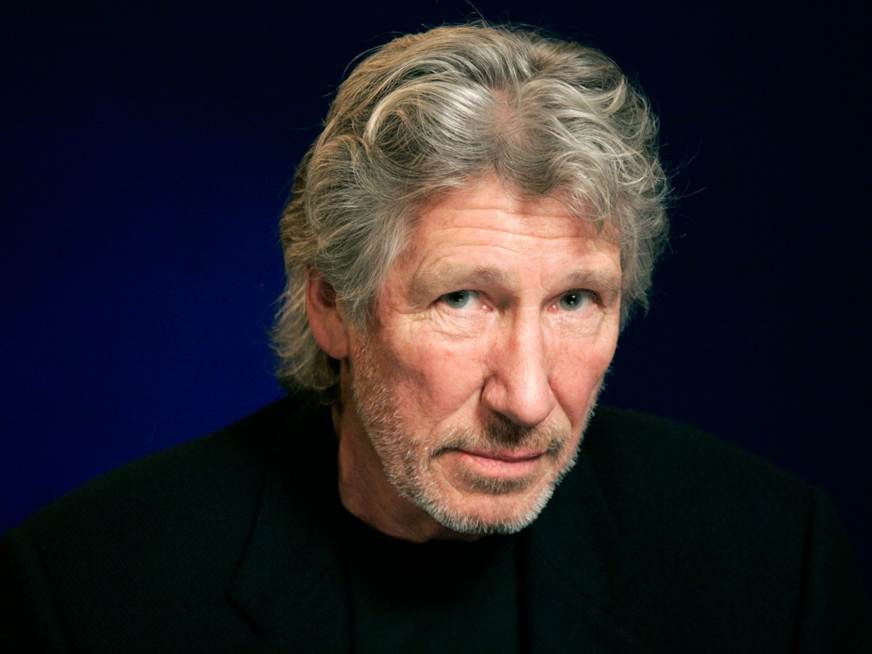
Roger Waters, the eternal anti-system warrior, a true activist against militarism, is a remarkably complex artist, his personality existing somewhere between genius and social sarcasm. To better understand what I mean by social sarcasm, here is a line from this very album: “This species has amused itself to death.” – a verse that also inspired the album’s title. Amused to Death is filled with such lines, the kind that define Waters so perfectly.
Roger Waters was born on September 6, 1943, in Great Bookham and, as I mentioned at the beginning of this article, he is one of the founding members of the legendary band Pink Floyd, for whom he composed and conceived some of the most influential albums in music history – The Dark Side of the Moon, Wish You Were Here, Animals and The Wall. Following his departure from the band in 1985, Waters continued a deeply conceptual solo career, exploring themes such as alienation, war, manipulation, and the loss of human identity.
On stage, Waters became renowned for his grand multimedia spectacles, such as the The Wall Live and Us + Them Tour tours, true cinematic experiences centered around conflict, empathy, and freedom. Outside the stage, he is also known for his passion for architectural design and political activism, being an outspoken critic of war, inequality, and media manipulation. On a personal level, he is a notorious perfectionist, famous for his extreme standards both in the studio and on stage. People close to him often mention that he writes down his ideas only with old Staedtler pencils, which he considers to be “lucky.”
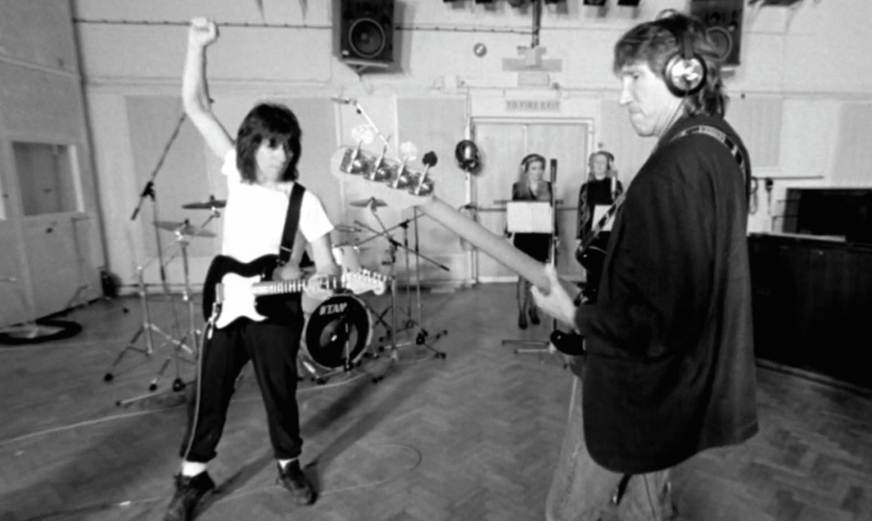
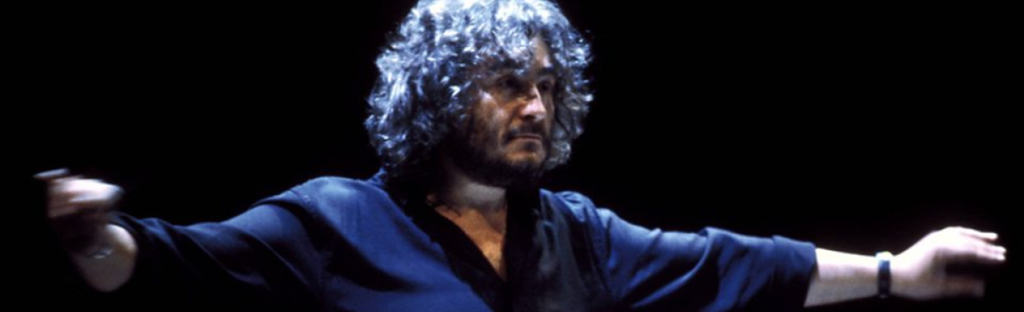
Above we can see a photograph taken during the recording sessions, with Jeff Beck on the left and Roger Waters on the right. The recording sessions for Amused to Death lasted four years, between 1988 and 1992, across multiple studios in both the United Kingdom and the United States, the album being produced by Roger Waters himself alongside Patrick Leonard. Below is the complete list of musicians and engineers involved in the making of this record, the list is extraordinarily long, yet worth exploring in order to understand just how complex this production truly was:
Roger Waters – vocals, bass guitar, EMU synthesizer, acoustic guitar, twelve-string guitar
Patrick Leonard – keyboards, percussion programming, choral arrangement, sportscaster voice, Hammond organ, synthesizers, acoustic piano
Jeff Beck – guitar, lead guitar
Andy Fairweather Low – electric rhythm guitar, acoustic rhythm guitar, guitars, twelve-string Rickenbacker guitar
Tim Pierce – guitar
Geoff Whitehorn – guitar
B.J. Cole – pedal steel guitar
Rick DiFonzo – guitar
Steve Lukather – guitar
Bruce Gaitsch – acoustic guitar
David Paich – Hammond organ
John “Rabbit” Bundrick – Hammond organ
Steve Sidwell – cornet
Randy Jackson – bass guitar
Jimmy Johnson – bass guitar
John Pierce – bass guitar
John Patitucci – double bass, electric bass guitar
Guo Yi & The Peking Brothers – dulcimer, lute, zhen, oboe, bass
Graham Broad – drums, percussion
Denny Fongheiser – drums
Jeff Porcaro – drums
Brian Macleod – snare, hi-hat
Luis Conte – percussion
John Dupree – string arrangement and conducting
National Philharmonic Orchestra Limited – orchestra
Michael Kamen – orchestral arrangement and conductor
Alf Razzell – spoken voice
London Welsh Chorale – choir
Kenneth Bowen – choir conductor
Katie Kissoon – backing vocals
Doreen Chanter – backing vocals
N’Dea Davenport – backing vocals
Natalie Jackson – backing vocals
P.P. Arnold – vocals
Marv Albert – sportscaster voice
Lynn Fiddmont-Linsey – backing vocals
Jessica Leonard, Jordan Leonard – children (screams)
Charles Fleischer – TV evangelist voice
Don Henley – vocals
Jon Joyce – backing vocals
Stan Farber (credited as Stan Laurel) – backing vocals
Jim Haas – backing vocals
Rita Coolidge – vocals
We can immediately notice some truly legendary names among the musicians involved: Jeff Beck, Steve Lukather, John Patitucci, Jeff Porcaro, Michael Kamen, Rita Coolidge, or Don Henley. Had I not researched this article beforehand, I would never have believed that Don Henley contributed vocals to this album. It almost feels as if Waters gathered some of the biggest names of the ’90s and united them under this project’ umbrella, a project that, interestingly enough, was not at all typical for many of them.
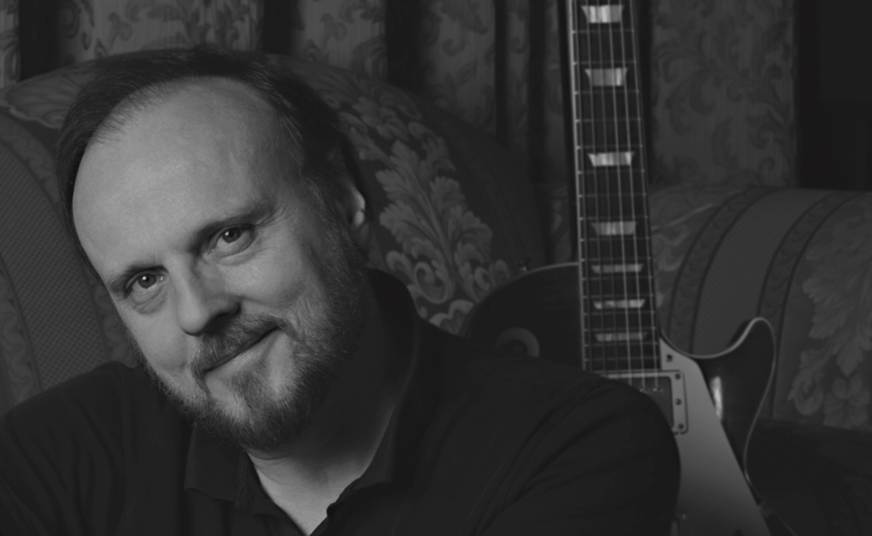
The production itself was handled primarily by Waters alongside Patrick Leonard and Nick Griffiths, while the sound engineers included Hayden Bendall, Jerry Jordan, and Stephen McLaughlin. James Guthrie was responsible for the mixing of this album, the very same engineer who had previously worked with Waters on The Wall and The Dark Side of the Moon. Guthrie and Waters spent entire months working solely on the stereo balance, trying to create the sensation that every single sound breathes within space. You can see James below:
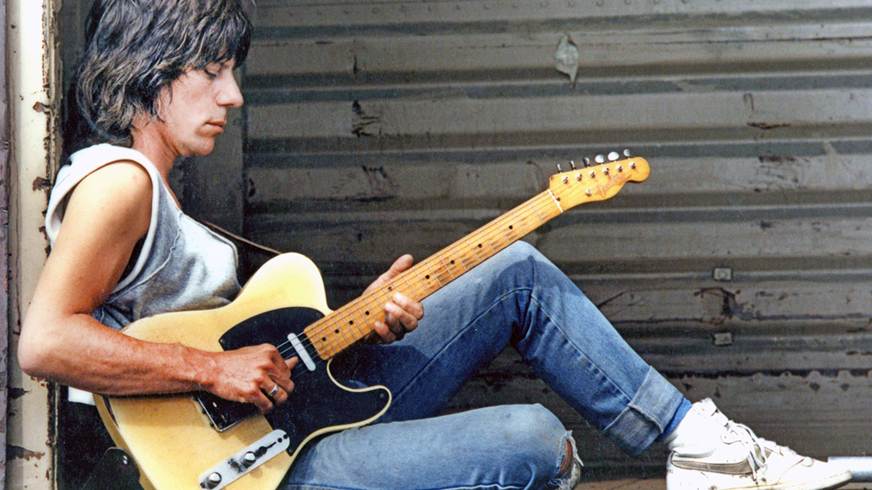
Waters’ production approach was filled with fascinating details, being well known for his notorious perfectionism, often repeating passages and recording sessions countless times just to alter the smallest nuances. The tensions between Jeff Beck and Roger Waters became quite famous, Waters repeatedly asking Beck to record dozens of versions of certain guitar solos so that he could later choose the “right” one. You can imagine, dear melomaniac, that a guitarist of Beck’s stature hardly needed to record dozens of takes for a single solo, surely he could have nailed it from the very first attempt. Beck would later admit that “working with Waters on Amused to Death was one of the most exhausting experiences of my career.” Below you can see Jeff Beck:
Patrick Leonard was the secondary producer, we could perhaps call him the “architect in the shadows” of this record, already highly respected for his success alongside Madonna. He played a major role in shaping the sonic architecture of Amused to Death, the choral arrangements, piano, synthesizers, and orchestral dynamics all carrying his unmistakable touch. He became Waters’ right hand inside the studio, the man capable of transforming chaotic ideas into a coherent structure.
In the opening tracks of the album we can also hear the mysterious voice of a man, Alf Razzell, a British veteran of the World War I, recounting a tragic story from the trenches. Waters discovered him in a BBC documentary and was so deeply moved by his testimony that he insisted on using the original, unaltered voice in order to frame the album between life and death.
Waters’ original intention was also to include samples of HAL 9000’s voice from 2001: A Space Odyssey, yet at the time Stanley Kubrick refused permission. Many saw this refusal as a form of “revenge,” considering that Pink Floyd had previously turned Kubrick down when he wanted to use music from Atom Heart Mother in his film A Clockwork Orange. Nevertheless, the 2015 remaster-remix edition of Amused to Death finally included the HAL 9000 voice samples, Waters’ vision thus becoming complete.
Earlier you may have noticed that I mentioned Michael Kamen, the celebrated American composer and conductor. He had already collaborated with Waters in the past and also took part in Amused to Death, conducting the National Philharmonic Orchestra in London, which can be heard on the tracks Too Much Rope and What God Wants, Part III. Years later he would say: “With Roger, the music must breathe. The orchestra does not illustrate, it judges the world alongside him.” Fabulous, isn’t it? He also described Amused to Death as “a film without images.”
As we also noticed at the beginning of this article, the album is highly atypical, because it is not rock, it is not pop, nor is it radio theatre, yet somehow it contains all of these elements at once. For example, you will often hear countless dialogues seemingly taken from television broadcasts, TV channels switching from one to another, or various sounds crossing the sonic space, all of these elements were calculated with surgical precision, their placement within the soundstage being extraordinarily important. This is precisely where QSound enters the stage, a technology I have wanted to write about for a very long time.

You see, dear melomaniac, for us audiophiles QSound is something like a siren’s song – a fascinating sound technology, yet one used extremely rarely, with only a handful of albums ever mixed in this format. Amused to Death is without question the most famous record to make use of QSound, and I would even dare to say that this technology significantly contributed to the album’s legendary audiophile status. Allow me first to explain what QSound actually is, and then how it shaped the sound of this record.
QSound is a spatial audio processing system developed in the early ’90s by the Canadian company QSound Labs, led by engineer Larry Ryckman. This technology creates the illusion of three-dimensional sound using only two stereo loudspeakers, without additional channels or surround processing. Unlike ordinary panning effects, QSound relies on phase delays, subtle amplitude differences, and carefully controlled variations in sound arrival times between each ear, effectively “tricking” the human auditory system into perceiving a fully spatial 3D soundstage.
Roger Waters became fascinated by this effect and used it brilliantly on Amused to Death, not as a simple studio gimmick, but as an integral part of the storytelling itself: televisions turning on behind you, voices whispering from the side, animals seemingly crossing the room, footsteps echoing in the background. QSound does not merely widen the soundstage, it transforms listening into a cinematic experience, turning the album into a true 3D audio work. When heard through a properly positioned system, with perfectly aligned speakers and the listener seated in the sweet spot, Amused to Death becomes one of the most impressive demonstrations of QSound in music history, alongside The Division Bell and The Immaculate Collection.
You might now ask yourself: well then, if QSound was so extraordinary, why did it never become more successful? Mostly because it depended enormously on the audio system through which a QSound album was played, ideally it required a high-resolution audiophile setup with correctly positioned loudspeakers. Otherwise, the three-dimensional effects were barely noticeable. More than that, on ordinary systems – inside a car, over the radio, or through desktop speakers – QSound albums often sounded thin, lacking body, bass, and warmth.
At the same time, during the exact period when QSound emerged, another spatial playback technology was also appearing – Dolby Pro Logic, soon followed by Dolby Digital, both far easier for the mainstream public to understand and implement, without requiring audiophile-grade systems. As a result, because QSound was difficult to explain and even harder to fully decode, very few albums were ever mixed using it, and the technology gradually disappeared, leaving behind masterpieces such as Amused to Death, still so deeply appreciated by us audiophiles.
Once the QSound mix had been completed, the mastering stage followed. Waters initially rejected digital mastering altogether, considering it “cold and inhuman,” and requested a special analog version instead, later remastered in 2015 on Super Audio CD, a release now regarded as a true reference benchmark for audiophile testing.
It is not difficult at all to understand why Amused to Death earned such legendary status among audiophiles. The moment you press play, you are immediately struck by the way it sounds: noises floating everywhere, voices seemingly coming from behind you, guitars hovering above your head.
One track that can instantly impress you is Too Much Rope, which opens with a dog barking from what feels like a nearby yard. The barking is recorded in such an extraordinary way, and the QSound technology works miracles here, you could swear the dog is somewhere far in the background, slightly to the right. The sensation is unique, you will genuinely believe you are outdoors and that the animal exists somewhere in the distance.
The track then continues with what, in my own interpretation, sounds like someone breaking down a door with an axe. The sensation is so realistic that you almost feel as if the character is about to enter your listening room. The recording quality is spectacular: the axe has body, height, and movement, traveling left to right across the horizontal axis. What follows is a horse carriage crossing the soundstage from left to right, perhaps the greatest spatial transition I have ever heard on a recording. It is not only the detail of the carriage that impresses you, but also its trajectory, because once it reaches the right side, it does not simply disappear, you can actually feel it turning away somewhere into the distance.
Another track that deeply impresses through its sound design is Three Wishes, whose concept revolves around a man encountering a genie from a lamp. The track begins with a “television voice,” speaking English with a strong Indian accent. The genie’s voice can then be heard descending from the upper right side of the soundstage toward the center, declaring in a deep voice: “Hey, boy, what’s happening? What’s going on? You can have three wishes if you don’t take too long.”
This genie’s voice is crafted with such precision that it can genuinely frighten you the first time you hear it, it sounds truly demonic. In reality, of course, it is Waters’ own voice, carefully processed to travel through the virtual soundstage. QSound contributes massively here as well.
I remember that when heard through more modest systems, or through systems lacking proper calibration, the voice became overly guttural and the words difficult to understand, many listeners initially believed it was merely some kind of roar rather than actual dialogue.
It is difficult for me to part ways with you and with this article about Amused to Death, because today I had the opportunity to write about a truly legendary record. Every time I listen to Amused to Death, I experience something that goes beyond music itself, it feels as if I am placed in the middle of unfolding events: I see wars, I see manipulation, I see all the elements against which Waters fights. Yet at the very same time, I also hear one of the most skillfully crafted records in the history of the music industry. Amused to Death is more than music, it is an experience filled with sounds that you genuinely feel you could reach out and touch. A true audiophile wonder.
Roger Waters remains a virtuoso when it comes to creating albums that tell uncomfortable truths. Some see him as a prophet of modern apathy, others cannot stand him and consider him an eternal troublemaker, too loud and too angry at the system. What remains undeniable is that without individuals like Waters, capable of calling things out exactly as they are, the rest of us would slowly sink into convenience and passivity. His activist intervention carries immense value: they wake us up and saves us from manipulation.
In closing, I will leave you with Waters’ own words, spoken at the beginning of the ’90s: “I don’t know if people will understand this album now. Maybe they will in 30 years, when the world will be even more filled with screens.” That thought alone should seriously make us reflect. Waters was frightened in 1992 by small and blurry screens, now, more than 30 years later, we are surrounded everywhere by giant bright displays. How manipulated have we become during these 30 years? I fear that, in 2026, the world may actually be even less capable of understanding Amused to Death than it was in 1992.
And yet, there are still a handful of us who, late at night, with the lights turned off, seated in the sweet spot between two good loudspeakers, allow ourselves to be consumed by this audiophile masterpiece, Amused to Death. And perhaps most importantly of all, we remain awake because of it.
Thank you, Roger Waters, for having the courage to tell the truth through music.
Silviu TUDOR
An article written in my sweet spot,
and this is what I’ve heard.