Dear reader, with the occasion of writing my first words for Romania’s official Tellurium Q supplier, AVmall, I am drawing your attention with this review in which we will discuss the interesting Tellurium Q high-end cables, today focusing on their interconnect cables: analog in XLR or RCA format, as well as digital – COAX, USB, and AES/EBU.
Why did I choose their interconnect cables for this review? Because I like them very much, that’s why. I had the opportunity to test many interconnects from many manufacturers, but I always returned to the neutrality and refinement of Tellurium Q cables, characteristics that I have not found in this form elsewhere.
Why interconnect cables and not speaker cables or power cables for this review? Yes, the question is fair, Tellurium Q also produces very interesting speaker cables, as well as superb power cables, but we will talk about these in other reviews because I have many things to tell you about them as well. However, today we will talk about interconnect cables, as these are the TQ cables that have brought me the greatest stability and neutrality in my audio system. Allow me to tell you all about this in the paragraphs that follow.
WHO IS TELLURIUM Q?
First, a little introduction, let’s see who Tellurium Q are and under what conditions they produce these interconnect cables. Investigating this company, I was surprised to discover that there is not much information on the internet, as the people behind Tellurium Q are withdrawn from the spotlight with little information about them in the media. If we look at their website telluriumq.com, we can see in the “About” section that the company is the creation of Geoff Merrigan, supported by his partner Simon Lomax, Tellurium Q being a family business based in the UK, with all their cables being handmade in their factory in Somerton, Somerset. Tellurium Q started as a small project, building cables for recording studios, starting from the idea of improving the sound in the studio. Thus, Geoff Merrigan began his study of cable architecture, leading him to discover important aspects that allowed him to create this exclusive brand of high-end audio equipment cables 15 years ago. It is worth noting that in the UK Tellurium Q is a very well-known company, even though they produce audiophile cables for such an exclusive niche. Even the Queen noticed Tellurium Q, awarding them the exclusive “Queen’s Award for Enterprise” twice, in 2018 and 2021, an award given by the Queen since 1966 to British businesses that excel in international trade. Blessed with this award twice, Tellurium Q achieved global success that they did not expect when they started making audiophile cables.
DO CABLES REALLY CHANGE THE SOUND?
Yes, absolutely! It is worth noting that Tellurium Q perceives cables as filters, which is perfectly true. I don’t think there’s a more convincing scientific factor for those who don’t believe in cables: a cable is essentially a kind of coil, especially when it’s long, and therefore, it will have a filtering characteristic, more precisely it will change the sound, naturally refining it. Often, the longer a cable is, the stronger its effect and its filtering. But it’s not just about how long it is, it’s also about the type of material used, how it was twisted and “jacketed”, and what plugs were used, even the type of solder used to solder the contacts matters. All these factors have an influence on the sound. For those who don’t believe in cables it is hard to accept that a power cable or a digital one can dramatically change the sound of an audio system. However, for those of us who have experienced a lot with cables, it is just that indeed cables do change the sound, and therefore what for some is distrust and a burden, for us audiophiles is a lever to better match the system, through careful matching of the cables we can achieve a higher level of fidelity and balance in the sound.
THE TELLURIUM Q CABLE RANGE
Before we get specifically into the Tellurium Q interconnect cable series, I first want to clarify a bit about the Tellurium Q product range and how they position themselves relative to audio devices. In principle, at TQ we have the following cable families: BLUE, BLACK, SILVER, and STATEMENT. If Blue and Black represent their entry-level series, then Silver and Statement would be the next steps on the refinement ladder. However, things are not that simple, as we will see next in this review, within these classes we have subclasses, we can have a cable from the Black series that surpasses a Silver one. How is this possible? Well, let me tell you more about all of this and shed some light on the Tellurium Q product range and cable families. In the meantime, I leave below a graphic with this cable lineup, as explained by TQ themselves:
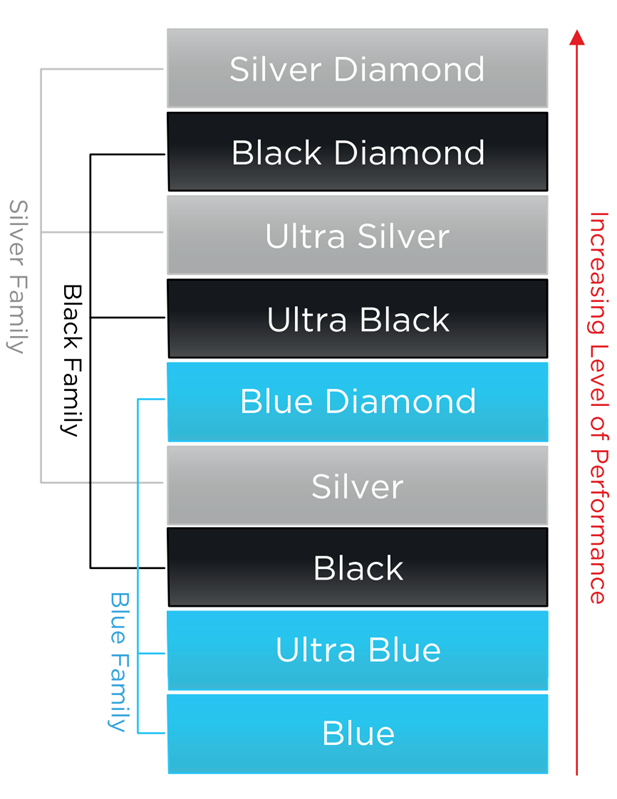
The idea is quite simple if we look closely: their cable range starts with the Blue series, which offers a warmer sound, just right for entry-level or home-cinema equipment. Then we have the Black series, which raises the level of refinement and is suitable for the mid-end or entry into high-end range. Then we have the Silver series, which maintains the cohesion of the Black series but raises the level of detail even more, being suitable for high-end systems. It must be understood that additional series maintain the sound of the respective series but raise the refinement bar one step higher. Initially, TQ proposed only basic models in these three series: Blue, Black, and Silver. In the meantime, they realized that these series possess a specific sound of their own, very appreciated by those who buy them, and then they started to create even better versions of these, diversifying the range. As we can see from the graphic above, there is the Blue Diamond variant, which clearly surpasses the basic Black or Silver variants, while retaining the Blue signature and raising the level of detail even higher. Similarly, we have the Black Diamond series, which clearly surpasses the basic models of the Black and Silver series, and even surpasses their improved versions, Ultra Black and Ultra Silver.
Thus, the first advice I give you in this review is to try the sound directions proposed by Blue, Black, and Silver, and even Statement if you have the budget for it. Then within the series you liked the most, for example a Black cable from the basic series, then climb one step higher, upgrading within that series: from simple Black to Ultra Black, up to Black Diamond.
Also, the second piece of advice I give you is to keep in mind that TQ has designed their cable ranges to work together. I know there’s a long discussion among audiophiles called “all cables from the same manufacturer”. Even I can tell you that I have tested this idea with certain manufacturers, but in some cases it didn’t work. However, in the case of TQ, I noticed that it is true, TQ really designed their cables to work together, and major differences will be observed if you have TQ cables all around: speaker, digital interconnect, analog, and power cables.
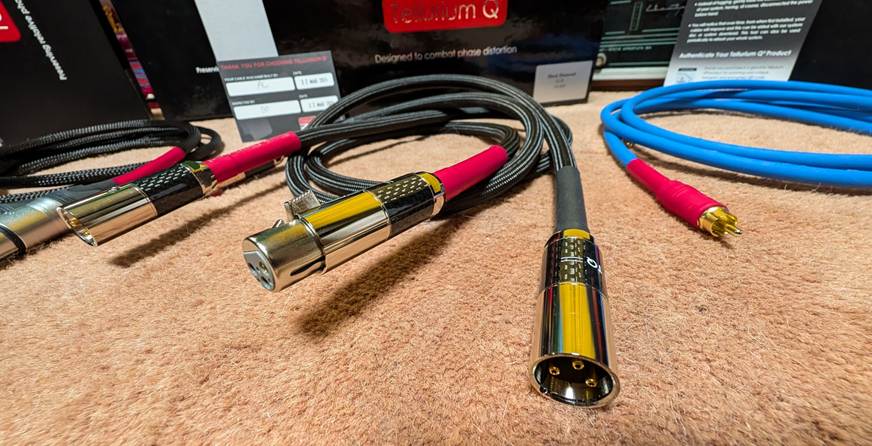
I also want to highlight the way Tellurium Q cables are delivered, in premium boxes carefully protected and presented as luxury products:
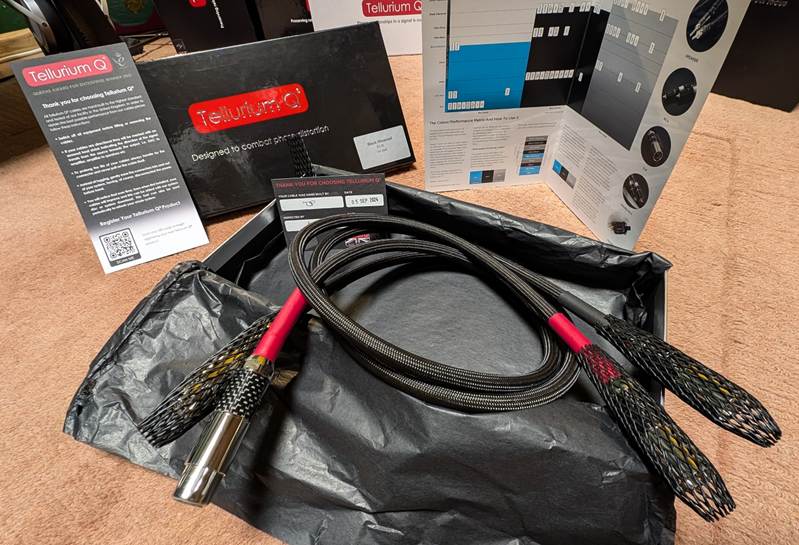
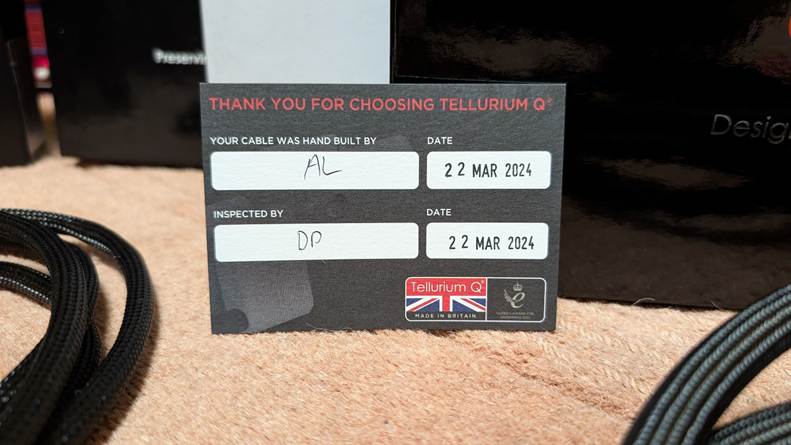
In the box, you will find a plaque with information about the date the cable was made, who assembled it by hand, and information about the person who performed the technical quality control:
Thus, let’s take a closer look at each TQ cable series and tell you what I tested, what caught my attention, and what opinions I formed.
BLUE SERIES
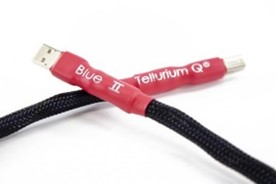
The first entry in the TQ cable range is the Blue series, now at iteration II. Many people think that the Blue series is a basic cable, without much refinement. Nothing could be further from the truth, the Blue series is still a handmade cable, built in the same TQ factory in Somerset, following the same quality values. TQ defines this cable as suitable for a home-cinema system. However, I have tested Blue in my high-end system and can tell you it is a superb cable. I tested both XLR and RCA versions on the analog interconnect side. The sound offered by this cable is warm and makes you listen to music. I think it fits like a glove in a “sharp” system, tending to fix such directions. I could say that it is very similar to the Black series but is a bit rounder and warmer. Below are the cables available in this series:
| Stereo RCA Tellurium Q Blue II | Stereo XLR Tellurium Q Blue II | Coaxial Digital Tellurium Q Blue II | Digital BNC Tellurium Q Blue II | Digital AES/EBU Tellurium Q Blue II | USB A-B Tellurium Q Blue II |
 | 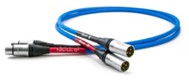 | 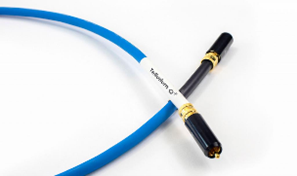 | 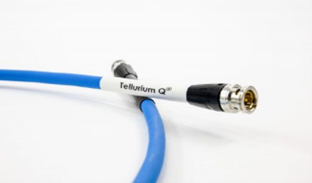 | 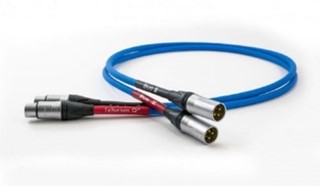 |  |
BLACK, ULTRA BLACK AND BLACK DIAMOND SERIES
About the Black series, I could say it is a kind of jolly-joker. Throughout my audiophile history, the Tellurium Q cables from the Black series, both series 1 and series 2, have been a kind of universal cables that have fit into many of my systems. The Black series is incredibly neutral, offering this unique characteristic of neutrality, but also a slight touch of darkness, as its name suggests, which I personally like very much and fundamentally fits my taste.
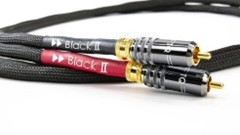
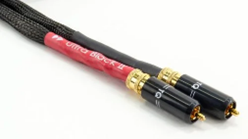
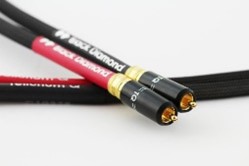
Below are the interconnect cables available in this series, first the analog ones:
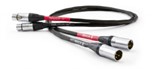
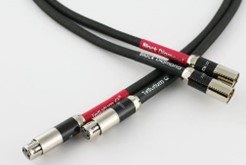
| Stereo RCA Tellurium Q Black II | Stereo RCA Tellurium Q Ultra Black II | Stereo RCA Tellurium Q Black Diamond | Stereo XLR Tellurium Q Black II | Stereo XLR Tellurium Q Ultra Black II | Stereo XLR Tellurium Q Black Diamond |
 |  |  |  |  |  |
And then the digital ones:
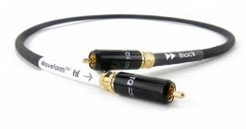
| Coaxial Digital Tellurium Q Black II | Digital BNC Tellurium Q Black II | Coaxial Digital Tellurium Q Black Diamond | Digital BNC Tellurium Q Black Diamond | Digital AES/EBU Tellurium Q Black II | USB A-B Tellurium Q Black II |
 | 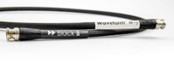 | 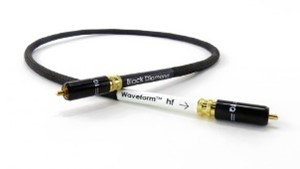 | 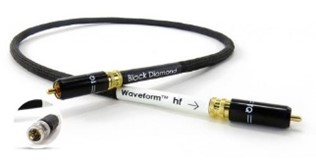 | 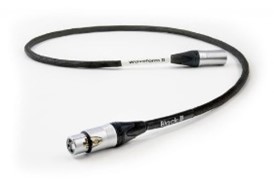 | 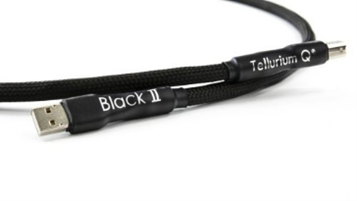 |
I have had the opportunity many times to test Tellurium Q cables from the Black series, and it is interesting to compare them. The most notable thing is how these cables evolve from the basic version, Black, then climb up to Black Diamond. I can tell you that the basic Black cable is very well balanced and brings a correct level of detail and a round bass. As we move up in the series, the level of detail increases, and the bass becomes even more controlled. The entire Black series maintains its sound signature, but what makes a remarkable difference is the top of the range, Black Diamond. If the basic Black is neutral, and Ultra Black is an evolution of Black but with a more “forward” sound, then Black Diamond is the most interesting in the series, somehow laid-back, refined, and conservative.
SILVER AND SILVER DIAMOND SERIES
Watching interviews with the guys from TQ, I found out that they regret the name they gave to this series “Silver”, because it is often thought that this series has the typical “silver” cable sound. The name is misunderstood as it is known that silver in cables, in most cases, adds a stridency to the sound and does not do well in all systems. Fortunately for us who know the Silver series, we know that it is not strident at all in the classic sense of the word, being a fine series, designed for high-end systems, bringing the highest level of refinement in the Tellurium Q cable range. The Silver cables sound lively, dynamic, clear, and with an amazing resolution. I recommend the Silver series in neutral, audiophile system, predominantly high-end. In these cases, TQ Silver cables shine!
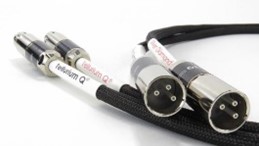
Let’s first turn our attention to the analog interconnect cables in this series:
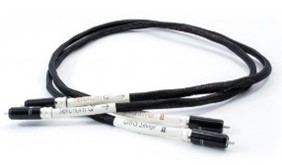
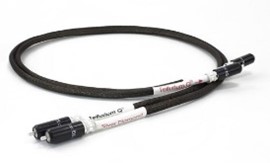
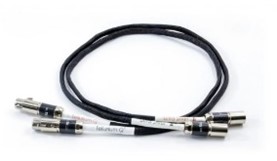
| Stereo RCA Tellurium Q Ultra Silver II | Stereo RCA Tellurium Q Silver Diamond | Stereo XLR Tellurium Q Ultra Silver II | Stereo XLR Tellurium Q Silver Diamond |
 |  |  |  |
Continuing with the digital cables in this series:
| Coaxial Digital Tellurium Q Ultra Silver II | Digital BNC Tellurium Q Ultra Silver II | Coaxial Digital Tellurium Q Silver Diamond | Digital BNC Tellurium Q Silver Diamond | Digital AES/EBU Tellurium Q Ultra Silver II | Digital AES/EBU Tellurium Q Silver Diamond |
 |  |  | 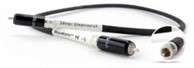 | 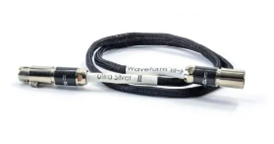 | 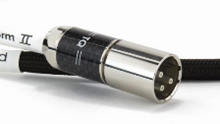 |
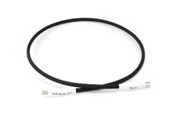
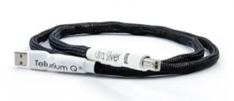
As can be seen, in the Silver series we have many digital cables, with the emphasis being especially on USB cables:
| USB A-B Tellurium Q Silver | USB A-B Tellurium Q Ultra Silver II | USB A-B Tellurium Q Silver Diamond |
 |  |  |
To shed some light on the sound of this series, I could say it is fair that the Silver series comes with a slight emphasis on mids and highs, but, as mentioned in the previous paragraph, this emphasis is not a stridency, but more of an accentuation just right for neutral systems that need this sparkle in the mids and highs. The Silver series not only comes with this emphasis on the mids and highs but also with superb control on the bass, and a high level of refinement. The concept from the Black series is maintained, and, as we climb a step in the range, from Ultra Silver to Silver Diamond, we will feel the same type of sound but with an even higher level of refinement. The model that makes a clear difference in sound from all these cables in the Silver series is the Silver Diamond, which differs from the rest of the series, somehow quiets all the shortcomings in the sound and raises the bar to a higher level.
STATEMENT SERIES
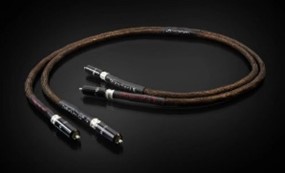
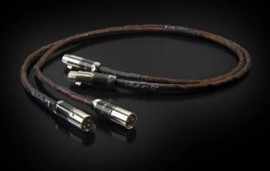
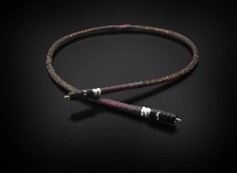
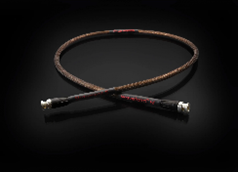
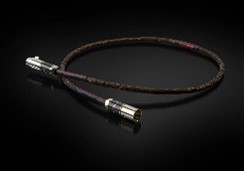
At the top of the Tellurium Q pyramid, we find the exclusive Statement series, this series stands out for the highest level of refinement produced by TQ, a truly high-end series, reserved only for those determined enough to bring perhaps the best interconnect cables in existence into their system. It’s hard for me to compare these cables with anything, but, most likely, to have TQ Statement cables in your system is like having Lewis Hamilton as your driver, driving you to your favorite café every morning. However, be careful, even if you have the money for Lewis Hamilton’s huge salary to be your personal chauffeur, that doesn’t mean you can provide him with a Toyota Yaris, you will need a car that matches him. Similarly, the Statement cables make no sense in an ordinary system, being reserved for truly high-end systems. Just to shed some light: the price for an RCA interconnect from this series is around 4000 EUR. Some truly exclusive cables these Statements are!
| Stereo RCA Statement II RCA | Stereo Statement II XLR | Statement II Digital RCA Cable | Statement II Digital BNC Cable | Statement II Digital XLR Cable | Statement II USB Cable |
 |  |  |  |  |  |
HOW DO THE TELLURIUM Q CABLES SOUND?
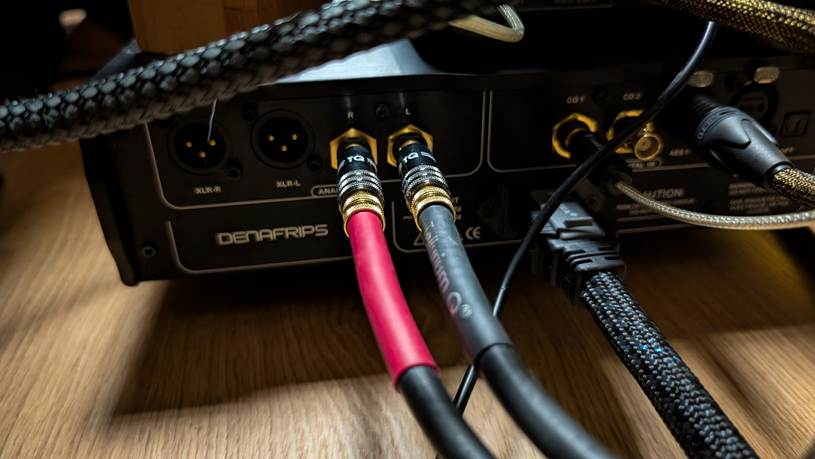
I think now, at the end of the article, you are certainly curious how these cables sound and, more importantly, how they would sound in your system. The most important advice I can give you here is to test them first, reach out to your Tellurium Q local supplier and request cables to test in your system. Try them out, draw your own conclusions. It’s imperative for you to discover on your own how they sound and what compatibility they can have with your system. But, until you have the chance for such a test, what I can do is tell you how they sound in my system. I have tested many TQ cables to finally stop at an interesting combination of interconnects. For the stereo part, I stopped at Black Diamond XLR, but also a pair of Black I RCA and a pair of Black II RCA. I use these three regularly in my systems. When I get sharper components for testing, I also use Blue II on the interconnect side to sweeten them up. This latter one has this particularity of sweetening sound, helping a lot in such cases. A scenario I desire for the future is to try a full cabling with Silver II Diamond – stereo interconnect, digital interconnect, and speaker cable. From what I’ve heard so far, the Silver II Diamond series is a true audiophile Graal.
THE MUSIC OF THIS REVIEW

During the time I was writing this review, I predominantly listened to the album “Aventine” by Danish artist Agnes Obel, released in 2013 by PIAS Recordings. It’s a great album, superb, full of artistic finesse, with an exceptional mix and master, perfect for testing systems and uplifting your soul. Because, dear reader, that’s exactly what happens every time I listen to such a superb album on my well-balanced system with Tellurium Q cables: it sounds wonderful, lifting your heart when you listen to such music! Agnes walks into my heart, and to prevent her from escaping, I bind her there tightly, of course with a Tellurium Q cable. I think this is the best explanation of how Tellurium Q cables can sound: an audiophile and melomaniac epiphany, nothing less, nothing more.
TIPS – WHAT TO CHOOSE, WHERE TO START
- First, listen to the entry-level cables from each range: Blue, Black, and Silver, see which direction you like, and then upgrade within that series.
- Don’t shy away from the Blue series; it can be a solution even though it is an entry-level series.
- Do not mix Blue with Silver; Blue can only be mixed with Black, or Black with Silver.
- The tendency is to choose cables as short as possible, but this is not always good for the sound – do you remember what we discussed earlier about cable length and the fact that they act as a filter? This doesn’t happen if the cables are short – you need long cables, at least 1.5 meters for interconnects.
- I emphasize the synergy that Tellurium Q cables create when all the cables in the system are from the same range – it helps a lot, don’t forget that.
CONCLUSION
Thus, I believe that the chameleonic ability of Tellurium Q cables is by far their most important feature, these cables having a solution for any system: if you have a system that screams, go for the warmth provided by Blue; if you have a system that does not need any sound change but want better resolution, then go for Black’s neutrality; however, if you have a dark system that you want to add a touch of audiophile sparkle to, then go for Silver. Also, only if you have a super high-end system, which we all only dream of, then go directly for the Statement series.
Silviu TUDOR
An article written in my sweet spot,
and this is what I’ve heard.