Dear reader, I owed you a factory tour from Sauerland, ever since I visited ROSE-HANDWERK, the German manufacturer of solid wood loudspeakers. My connection with ROSE-HANDWERK is a very strong one, I hold them close to my heart, ever since I fell head over heels in love with the speakers they build, but also with the team behind the brand, wonderful people in an equally wonderful place.
Last year I integrated a pair of Vitesse Wave into my system, speakers that truly spoke to me and that I kept as my main speakers as they impressed me with a very special and holographical sound I was looking for in a long time. Amazed by their quality, I decided to travel to the source itself, to find out more, how my speakers were built and what story lies behind the design and manufacturing process.
If you haven’t already read the other articles I wrote about ROSE-HANDWERK, I invite you to discover them, there is an in-depth review of the Vitesse Wave, a tour of their listening room, a ROSE-HANDWERK company profile and an interview with the man behind the brand, Markus Grelka. These articles complement the present one and will help you better understand this fascinating brand. In this article, we will focus entirely on the production methods and on the ROSE-HANDWERK factory. So, I invite you to sit back comfortably and follow this entire story.
MARKUS GRELKA – THE SPEAKER ARTISAN OF ROSE-HANDWERK
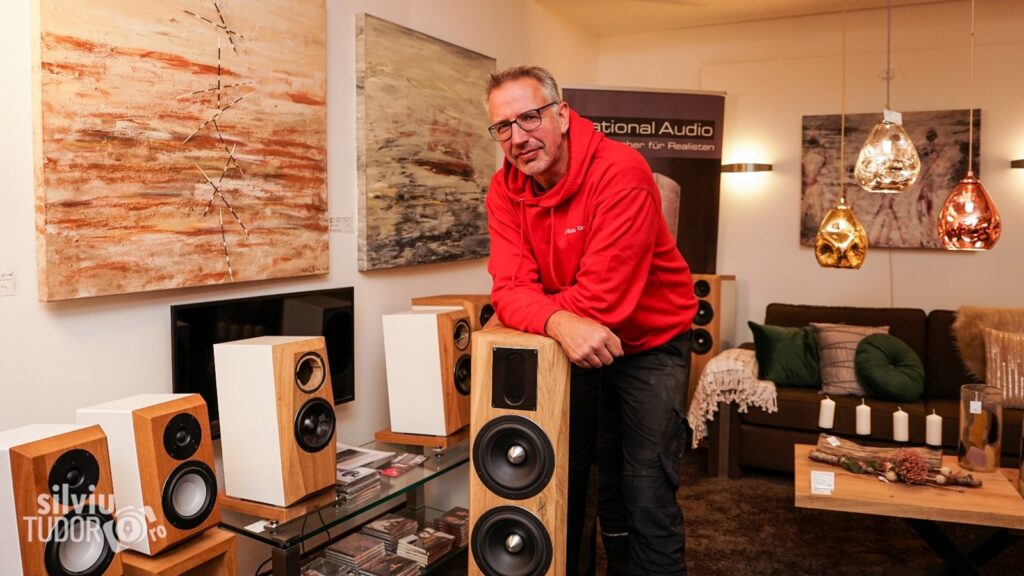
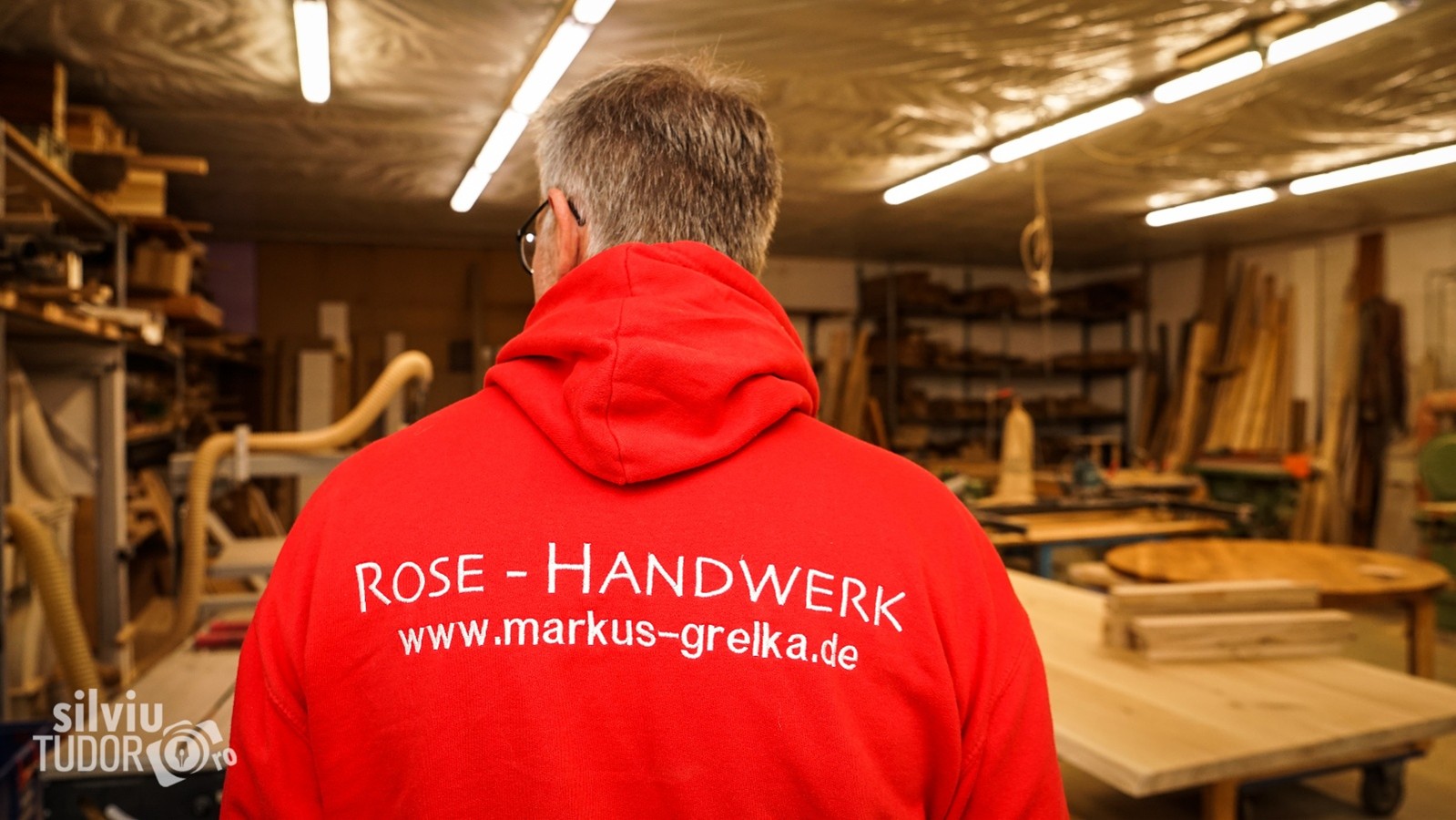
My host was Markus Grelka himself, the master behind the ROSE-HANDWERK sound, the one responsible for both the design and for the craftsmanship of the speakers. Markus is a tall man, calm and warm at the same time, always smiling and almost always dressed in a red hoodie and work trousers with side pockets. Funny enough Markus, I like to dress the same way. When I visited you, I chose to wear a shirt, a scarf, but generally I dress the same, hoodie and pocket trousers, if you ask me I would go dressed like this even to the opera, it feels like the most comfortable clothing. So, dear reader, from the very first moment I laid eyes on Markus, I knew he was one of my kind.
Markus’ passion for audio started in his childhood when, being passionate about woodworking but also about audio, he built his first pair of speakers in a DIY manner, from there the passion grew and we arrive today at a point where Markus has three speaker series in his portfolio, over 12 models, from the interesting Monitor 5, to the entry-level Micro and up to the fabulous Rose Cronenberg.
I have listened to almost all of the speaker models created by Markus, and I can tell you that behind his sound there is truly a distinct philosophy, because if I were to listen to his speakers blindfolded, I would immediately recognize them as ROSE-HANDWERK. They have a unique sound, extremely holographic, with an impressive soundstage that I have not encountered elsewhere, their sound is natural and very correct, preserving a living magic within it.
THE LOCATION
Continuing our story, I was welcomed by Markus and guided through all the rooms and manufacturing processes of the ROSE-HANDWERK “hochwertige Manufaktur” – a German term that refers to a high-end, handcrafted workshop. It all started with a good coffee, a wonderful conversation and a deep sense of well-being, as I mentioned before, the entire ROSE-HANDWERK team is made of wonderful people, it feels like you are visiting someone’s home, a family of kind people, rather than a strict German factory.
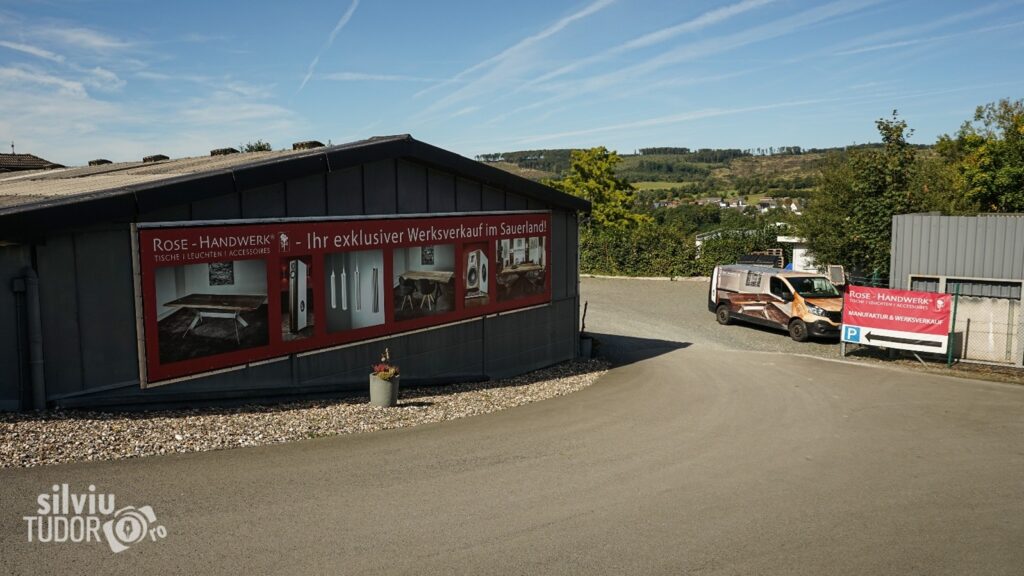
The ROSE-HANDWERK location is truly special, I could call it an oasis, very typical of the German countryside. ROSE-HANDWERK is a family-run furniture business and craftsmanship atelier, located in the beautiful Sauerland region near Dortmund, in the federal state of North Rhine-Westphalia.
The factory and showroom are just 30 minutes by car from Dortmund Airport. As I mentioned above, the location is wonderful, situated near the towns of Arnsberg and Meschede, where you can easily find accommodation, of course with that classic German breakfast included, delicious and very rich.
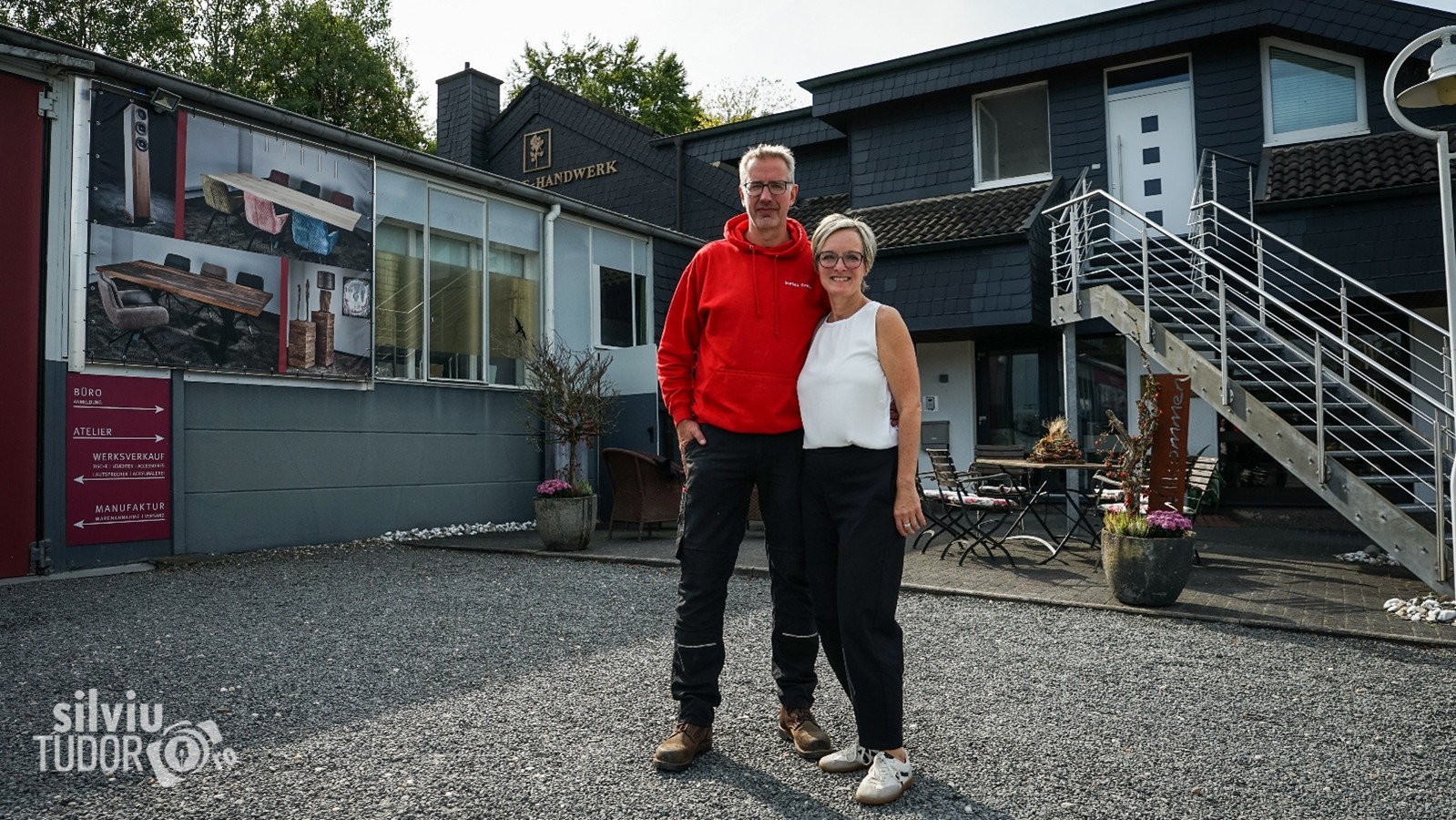
The Rose family has been in this location for over 50 years, they own the property where both the factory and their home are located, their entire life revolving around this place, a true oasis as I would call it, you can feel the good energy, the smiles, somehow almost hidden away from all the troubles of the world at this moment. I leave you below a photo from the entrance:
FIRST STOP: THE SHOWROOM
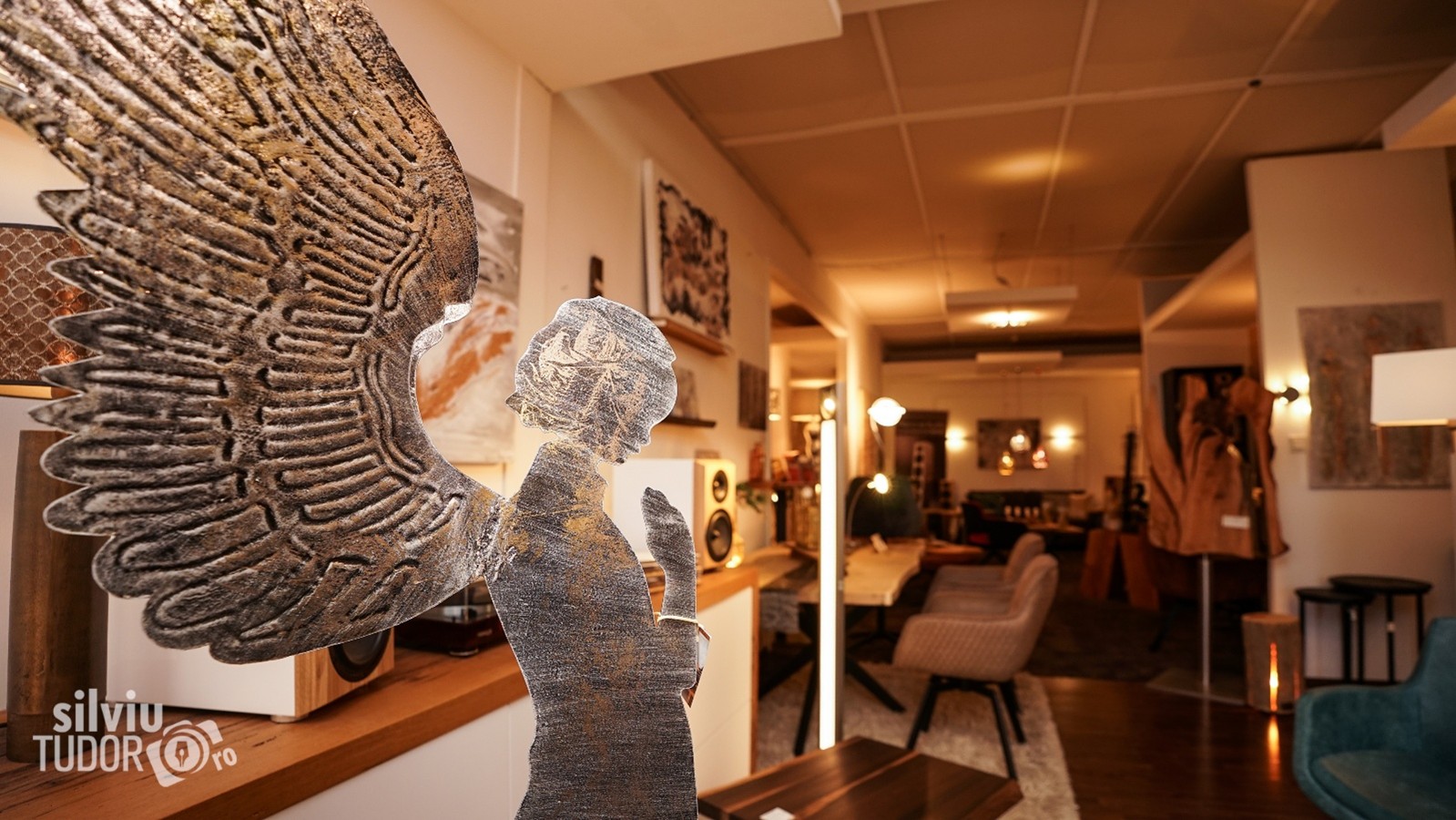
The first stop was, of course, the ROSE-HANDWERK showroom, where you are surrounded by their beautiful solid wood tables, the lamps they produce, various accessories, but also the truly impressive artworks of Elisabeth Rose, clearly the artist of the Rose family. The showroom is warm, welcoming, it smells of wood, you hear laughter, you feel the artistic attention to detail, it is a place worth visiting.
Of course, Markus’ speakers are also present throughout the showroom, you can encounter them everywhere. This is where we had our coffee and regained our energy. We had only 2 hours of sleep, having left home somewhere around 2 AM for our 2000 km trip. But the energy of the showroom brought us back, this stands as proof:
SECOND STOP: DESIGN AND CONCEPT
The next stop was the room where Markus creates the design of these speakers, a busy room, with many products in development stage, mock-ups, prototypes, drawers full of electronic components, but, in this controlled chaos, I felt enthusiasm emanating from all over the place. In this room Markus builds mockups, sketches ideas, he lays down his thoughts and experiments extensively with electronics before a speaker becomes the final “recipe” and goes into production.
Markus told me in the interview I conducted previously:
“My loudspeaker development process is purely data-driven, and real listening happens only at the very end. Measurements and simulations provide the foundation; they help me find the best crossover topology. It’s a scientific process; the physics of acoustics are well known. Of course, the beginning always starts with an idea and the careful selection of drivers that naturally harmonize with each other, so that the crossover can remain as simple as possible. I believe it makes no sense to ‘marry’ drivers that behave too differently. Listening tests come only at the end, for fine-tuning. I then use different genres of music. Finding the best crossover topology and frequency balance, that’s where the real magic of a speaker happens.”
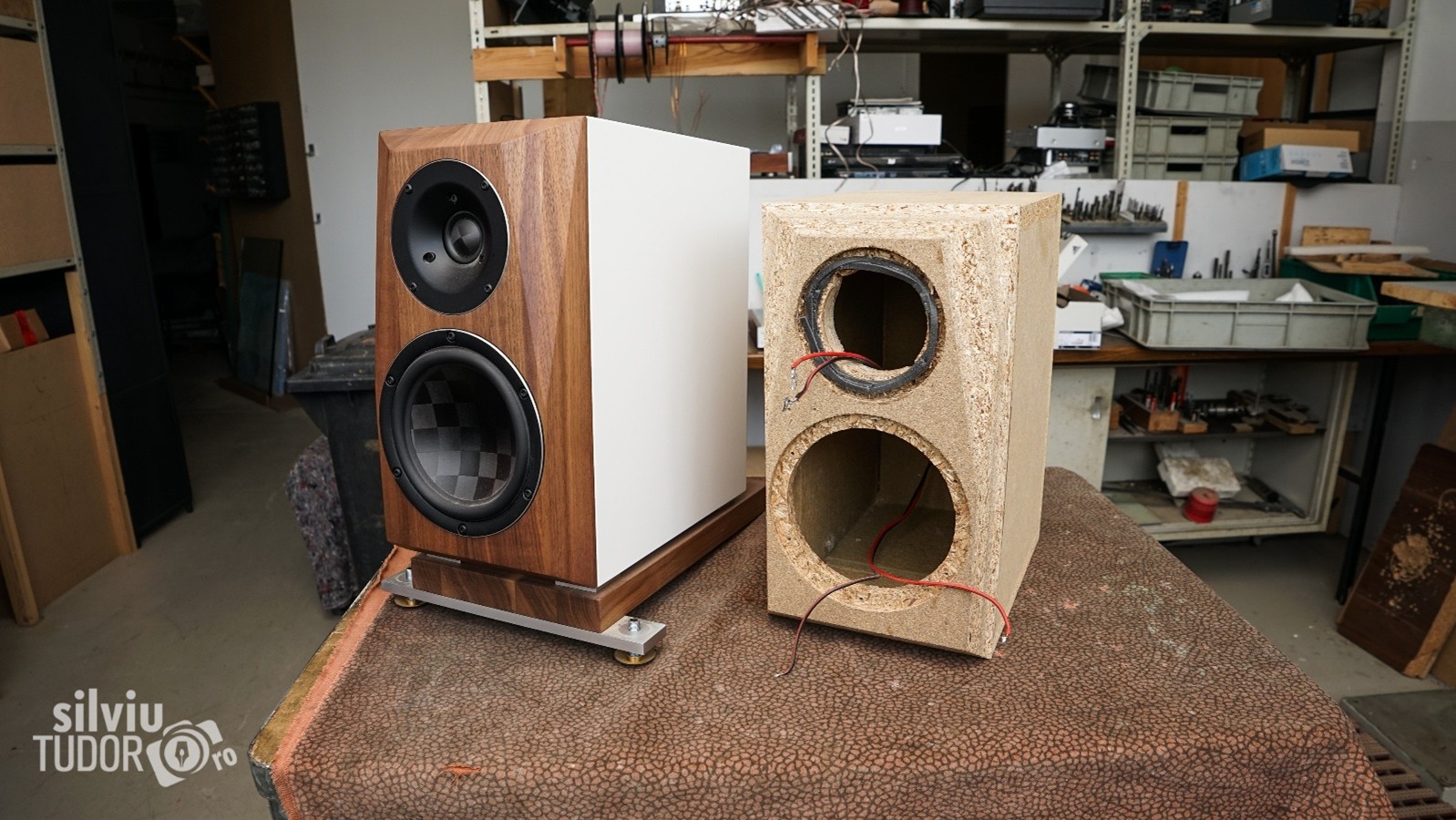
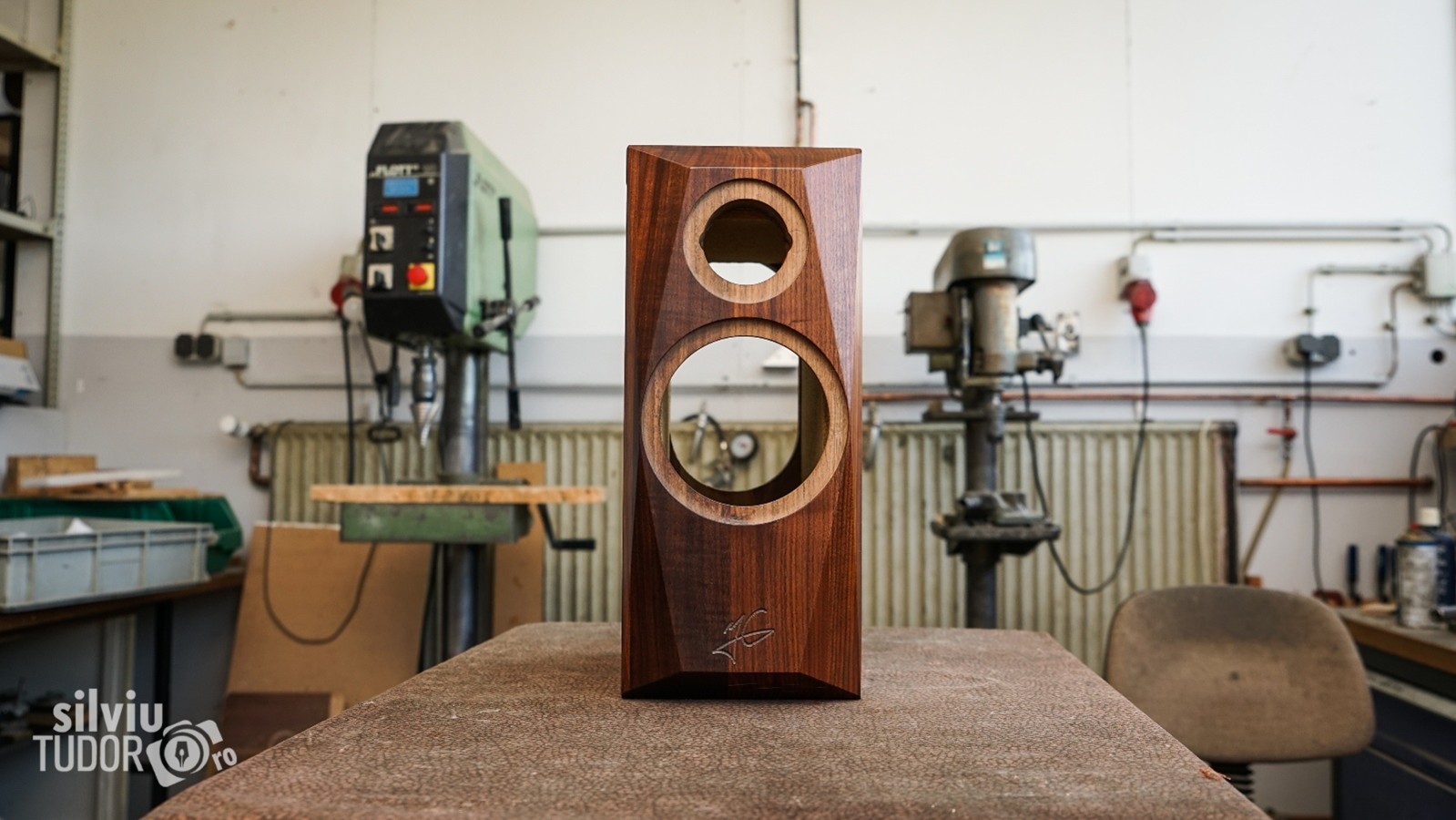
This design process is probably the most important one, dictating 100% how a speaker will sound and ensuring it aligns with the ROSE-HANDWERK house sound – natural and holographic. Markus experiments extensively with the crossover section, making sure that all components work together, each crossover being specially designed and finely optimized.
I must also mention the influence of his mentor, Joachim Gerhard, founder of Audio Physic and Süsskindaudio. Joachim, a true legend in the world of high-end audio, guided Markus in his speaker design, this is how Markus had the chance to refine his approach, as he himself puts it: “I’m standing on the shoulders of giants”.
THIRD STOP: THE LISTENING ROOM
Before moving directly into the factory area, we decided to stop for a moment in the listening room, about which I have already written a detailed article, I promise I will leave you a link to it at the end of this article. From my point of view, this is the cherry on top of the ROSE-HANDWERK factory, this very listening room that offers a unique experience, in a room that doesn’t say much at first glance, but once the lights go down and the music begins, a kind of magic appears that is hard to put into words. The ROSE-HANDWERK listening room is one of the most special rooms I have ever listened in.
I will extract a few paragraphs from that previous article:
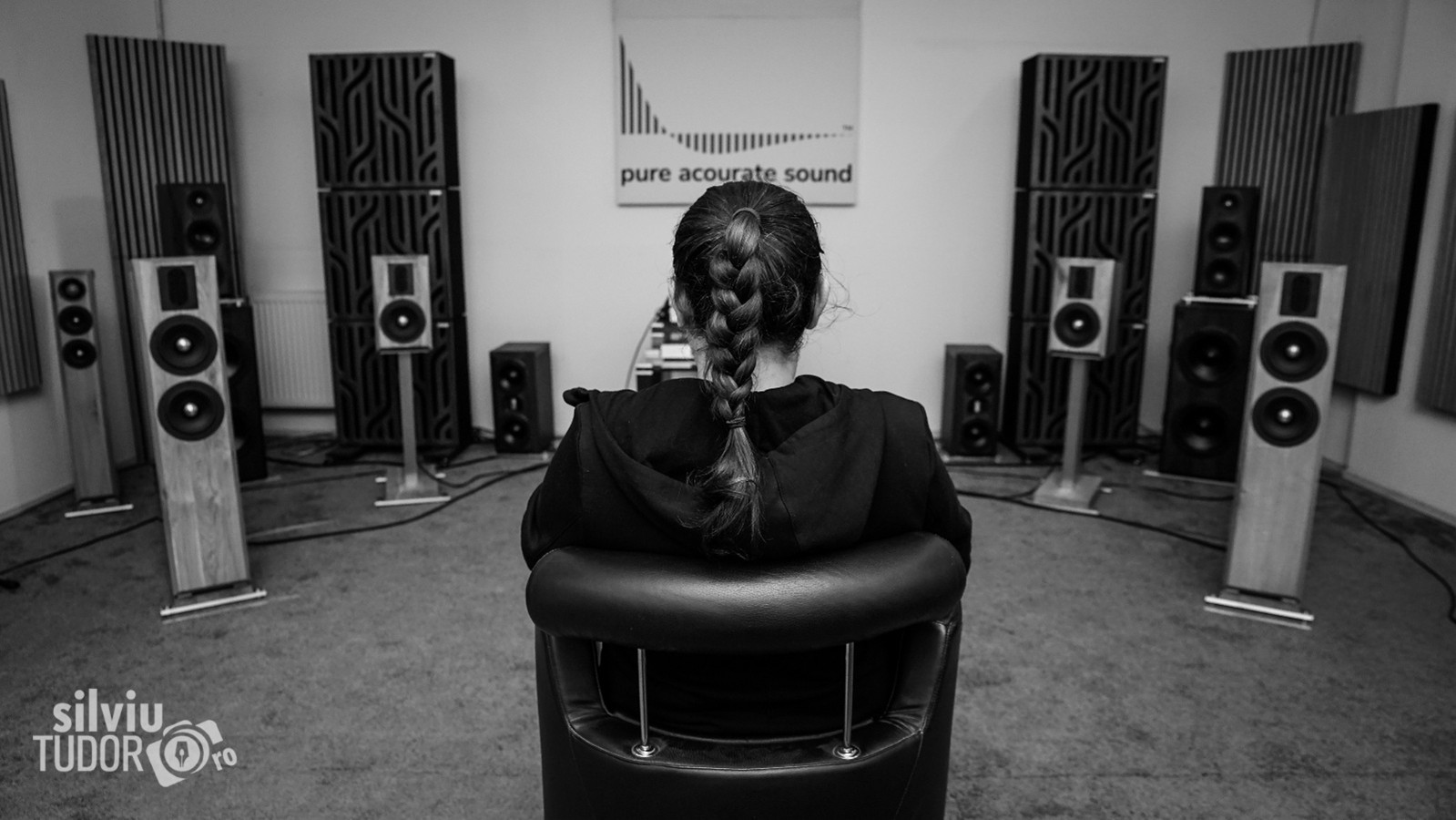
„So, after the coffee had been enjoyed, the tour completed, and the stories exchanged, the moment finally came to listen to the ROSE-HANDWERK listening room. Following Markus, I discovered the room behind a massive sliding door that opened to reveal a space of roughly 40 square meters, about four meters high, with a peculiar ceiling, carpeted floor, simple walls, acoustic treatment from GIK Acoustics, and — the first thing that caught my eye — a nearfield-style setup, completely unusual for a room of this size.
It didn’t matter which speakers we were listening to — the position was always the same: nearfield. I talked to Markus right away, and we realized we shared the same taste when it comes to soundstage: holography, which, in truth, can only fully shine in a nearfield setup. The speakers were positioned about two meters from the back wall, roughly three meters apart, forming an isosceles triangle with the listening position — though an unusual one, with the distance between the speakers and the listener smaller than the distance between the speakers themselves. Atypical, but fascinating. I would later learn that this placement enhances what Markus calls “the bubble”.
We had only two listening chairs at our disposal: one placed perfectly in the sweet spot, and a second positioned right behind it — a seat from which the sound was still excellent, almost like being in the second row at a concert.
Naturally, I took the prime position, while Lucia sat in the “row two” seat. Markus smiled and walked toward the light switches, saying: “This is how we listen here — in complete darkness. It’s the best way to reach the music.” And, of course, in my mind I replied: “Bravo, Markus, that’s exactly what I’ve been doing all my life — only in darkness can I enter into full intimacy and communion with the music.”
In that perfect darkness, the music began, and we were genuinely taken by surprise. Quite literally, as Markus calls it, a huge bubble of sound enveloped us completely — a bubble that must have been four or five meters in diameter. A vast, magical sound that pushed you into a dreamlike state, a sensation I had never experienced before that moment.
After five or six tracks, Markus stopped the music and turned on the lights. Like moles disturbed in their burrow, we squinted toward him and told him that it sounded unbelievably good — we could hardly believe how impressive the sound was in that room full of speakers, without any spectacular design features or elaborate wooden constructions on the ceiling or the floor.”
Returning to the manufacturing process, now that we have clarified the design part, we move into the woodworking area, where ROSE-HANDWERK operates a true production line, an impressive factory. It is worth mentioning that I am also a woodworker myself, running my own business “Silviu TUDOR WoodWorks” for over 10 years, being, like Markus, deeply passionate about woodworking and the living nature of wood. So, it was easy for me to observe and to mark those details that separate a regular factory from a master carpenter’s woodshop.
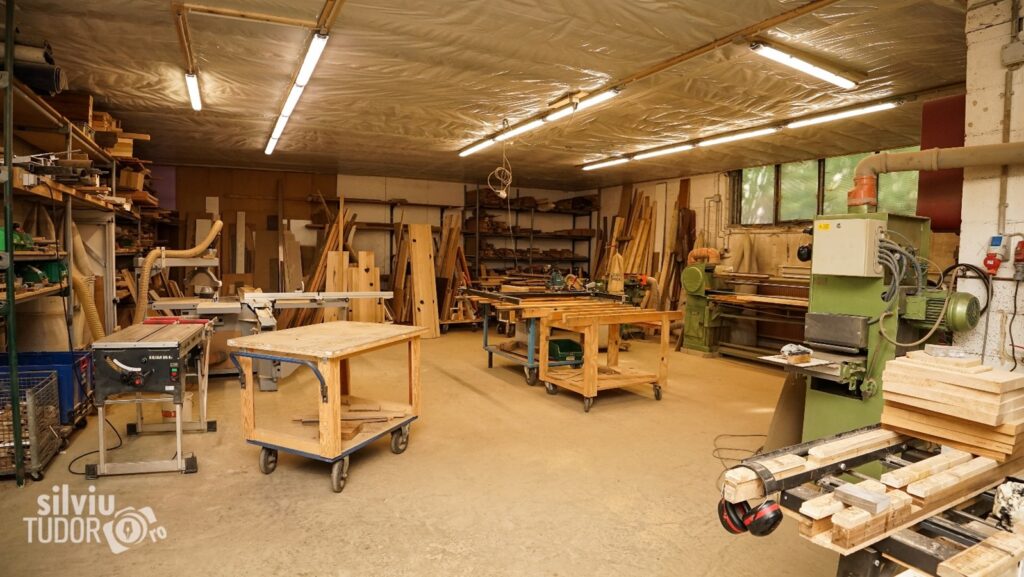
It was interesting that in the ROSE-HANDWERK factory I discovered something very authentic, compared to other mass-production factories I have visited, ROSE-HANDWERK, even though it is an impressive factory with many facilities and machines, maintains a pure connection to craftsmanship, many activities are done by hand, without CNCs and other automated machines, the woodworking process is largely the same as it was 100 years ago. Below is an image of the main hall of the ROSE-HANDWERK factory, where cutting, sanding and planing takes place:
FOURTH STOP: CUTTING
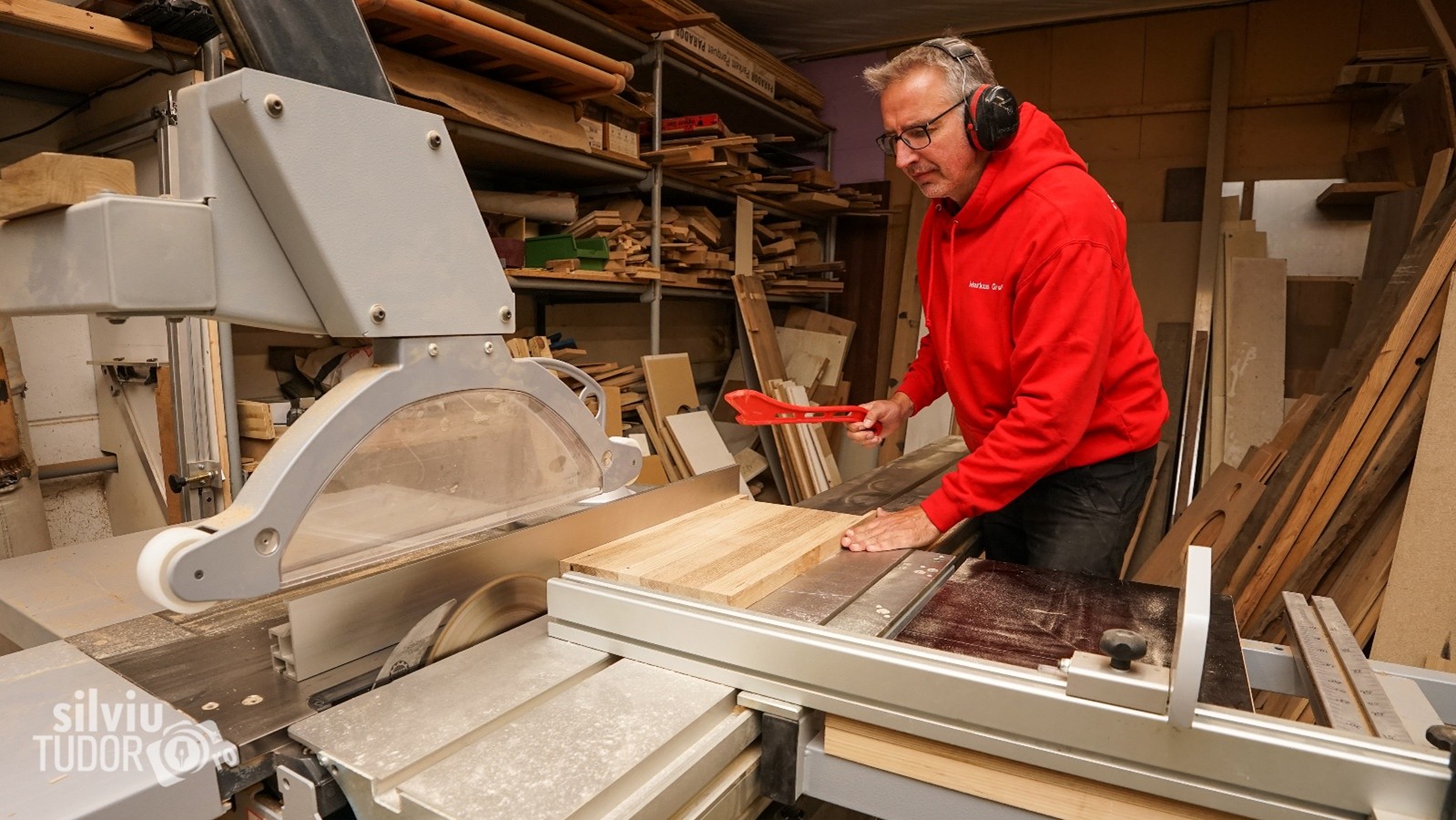
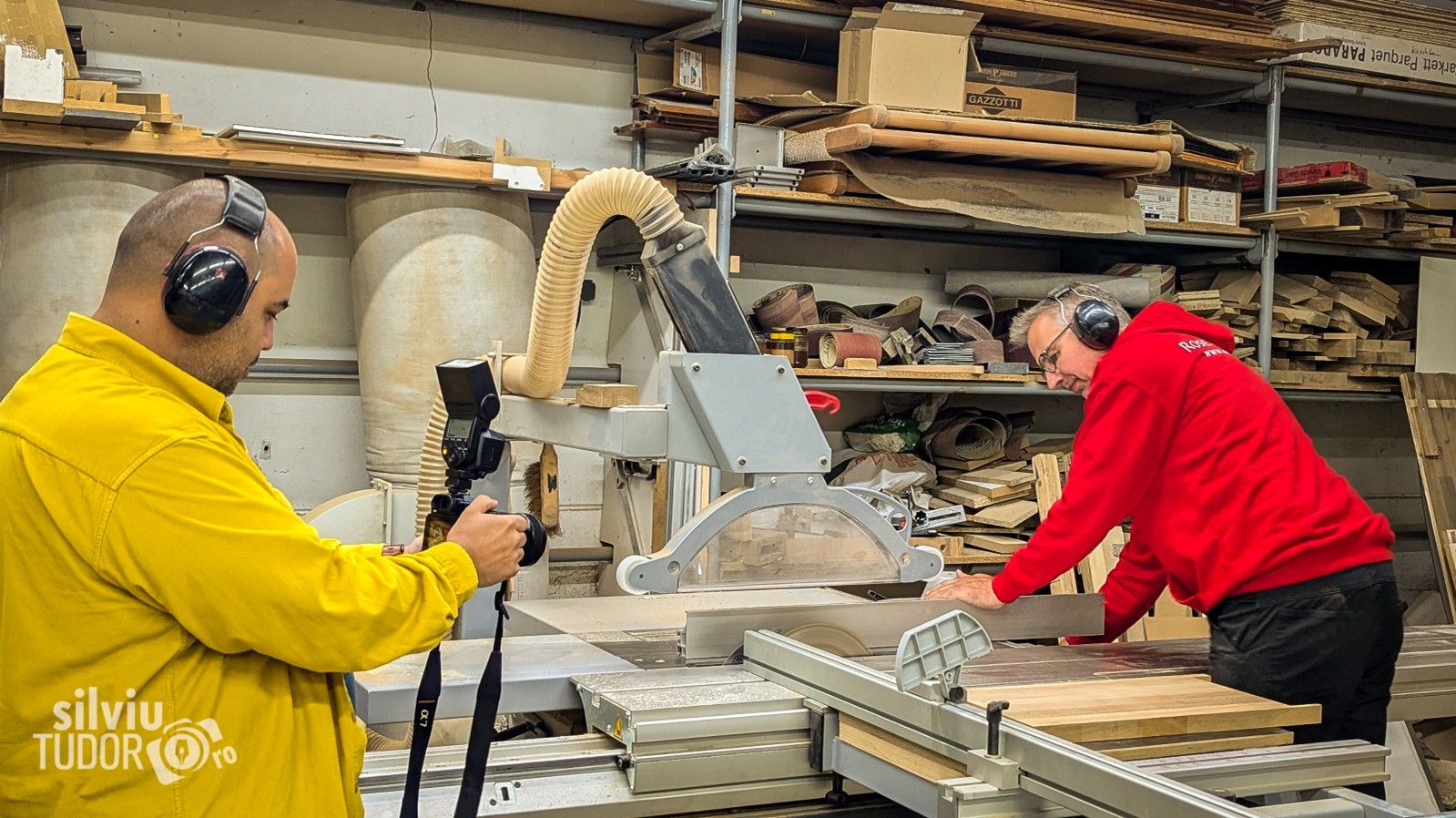
The construction of a speaker cabinet begins, of course, with cutting the materials that will form it, the side panels, the front baffle, the back and the internal enclosure that shapes the speaker. Below you can see Markus using the table-saw to cut an oak side panel for a Vitesse speaker:
FIFTH STOP: PLANING AND PREPARATION
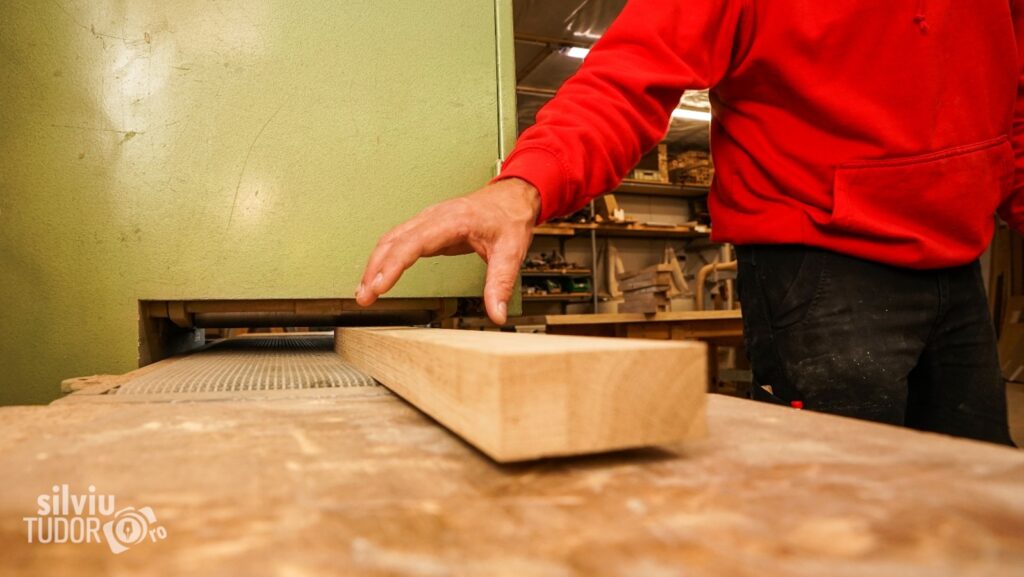
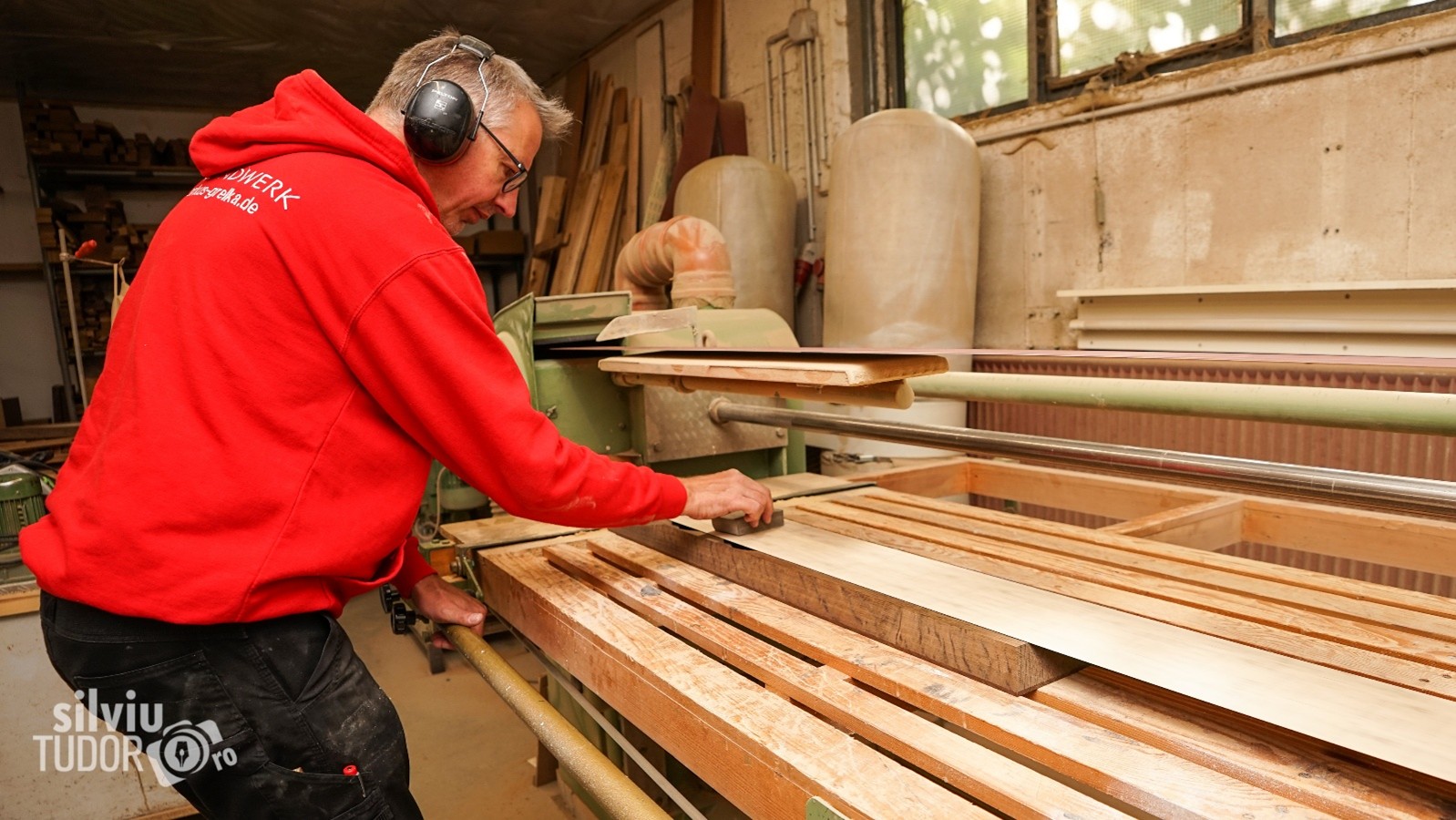
The next step is planing and preparing the pieces. These are first planed, as you can see in the image below, meaning they are made perfectly straight, transforming a rough piece of wood into a perfectly flat surface.
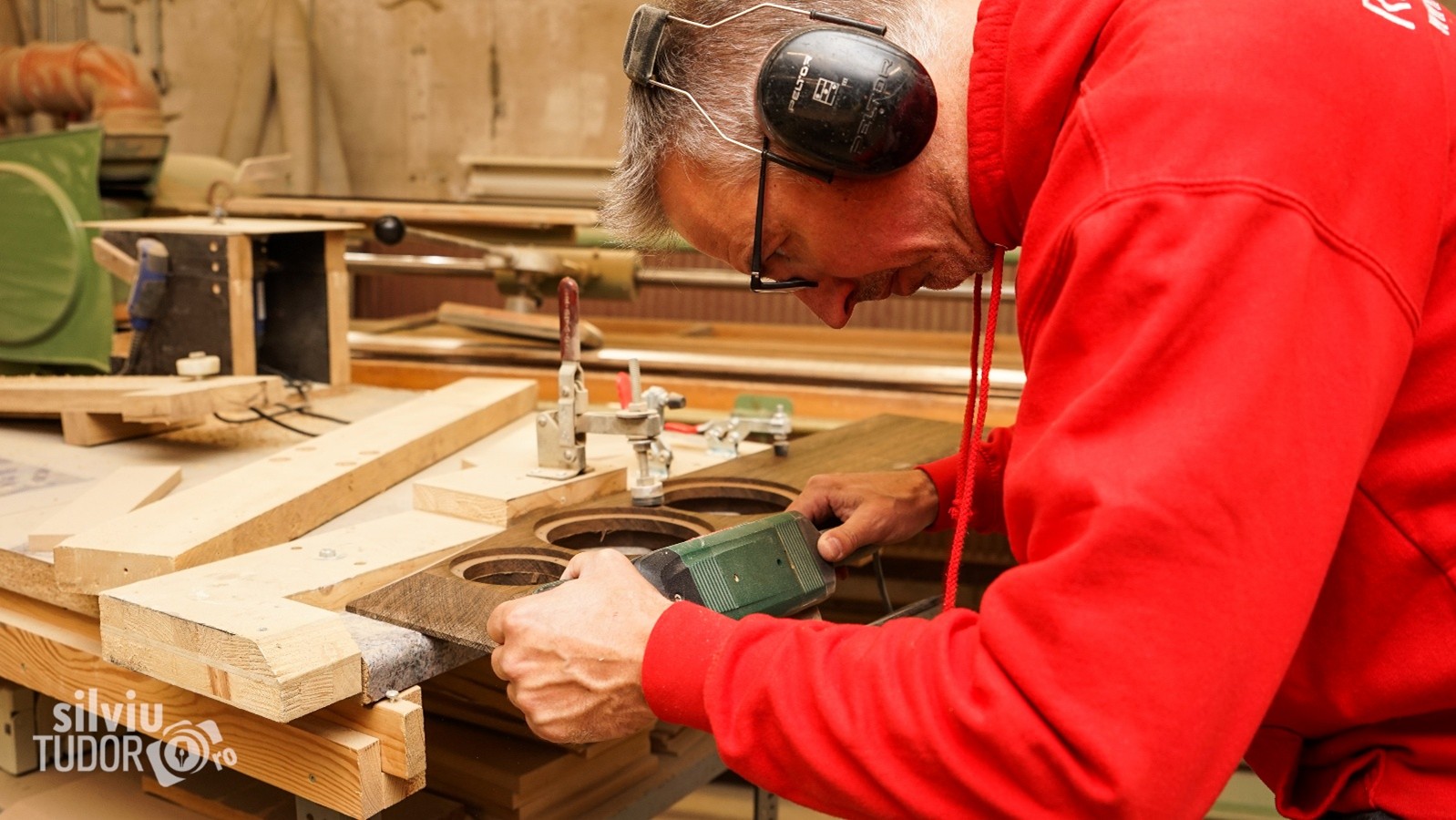
After planing comes the preparation of the pieces, where the necessary holes are added for the drivers, as well as the cutouts for the rear terminals and other elements. You can imagine how precise these holes need to be in order to allow components to be installed with almost zero tolerance.
SIXTH STOP: PRE-SANDING
Pre-sanding is an extremely important operation in woodworking. You cannot assemble if the pieces to be joined have not been pre-sanded. Many times, this step is what truly makes the difference between a beginner woodworking piece and that of a master craftsman, like Markus.
Why is pre-sanding important? Because it adds to that level of refinement that would otherwise be impossible to achieve. The raw form of the wood, together with the planing process, leaves the pieces with a certain harshness, which would be difficult to tame later on. It is much easier and more effective to carry out this step before assembly.
SEVENTH STOP: ASSEMBLY
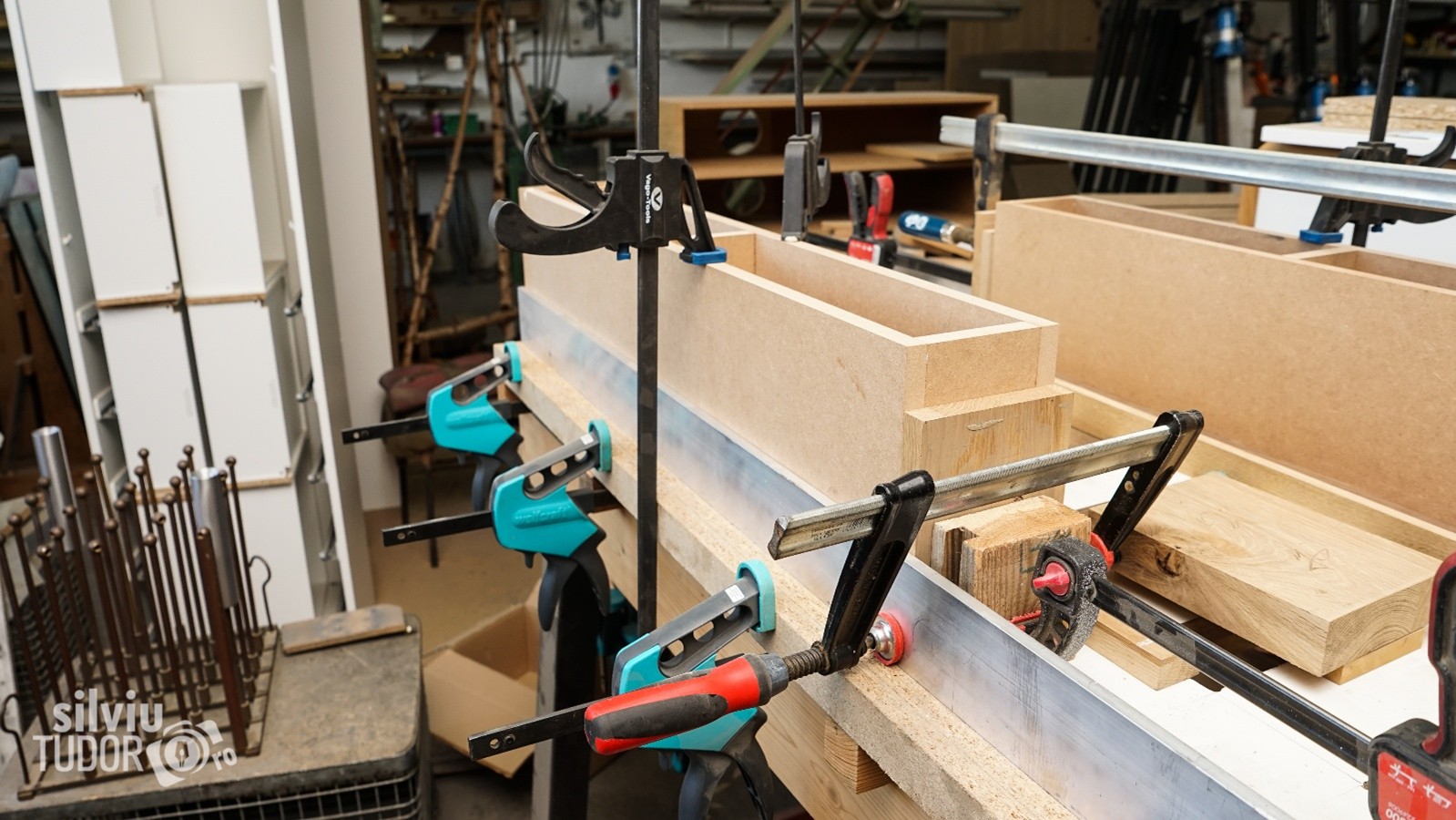
Assembly is probably the part we woodworkers enjoy the most. All the pieces prepared in the previous steps are brought together and the shape of the speaker begins to emerge. The clamps are there to hold everything in place and ensure the pieces bond together and never let go.
Markus has a dedicated area in his workshop just for this, where you can see many such “fetus” speakers waiting for the glue to dry. The adhesive used is a special, elastic one, allowing the wood to shift naturally over time without cracking. It is also worth mentioning that Markus does not use screws to build the cabinets, only wood glue.
EIGHT STOP: METALWORKS
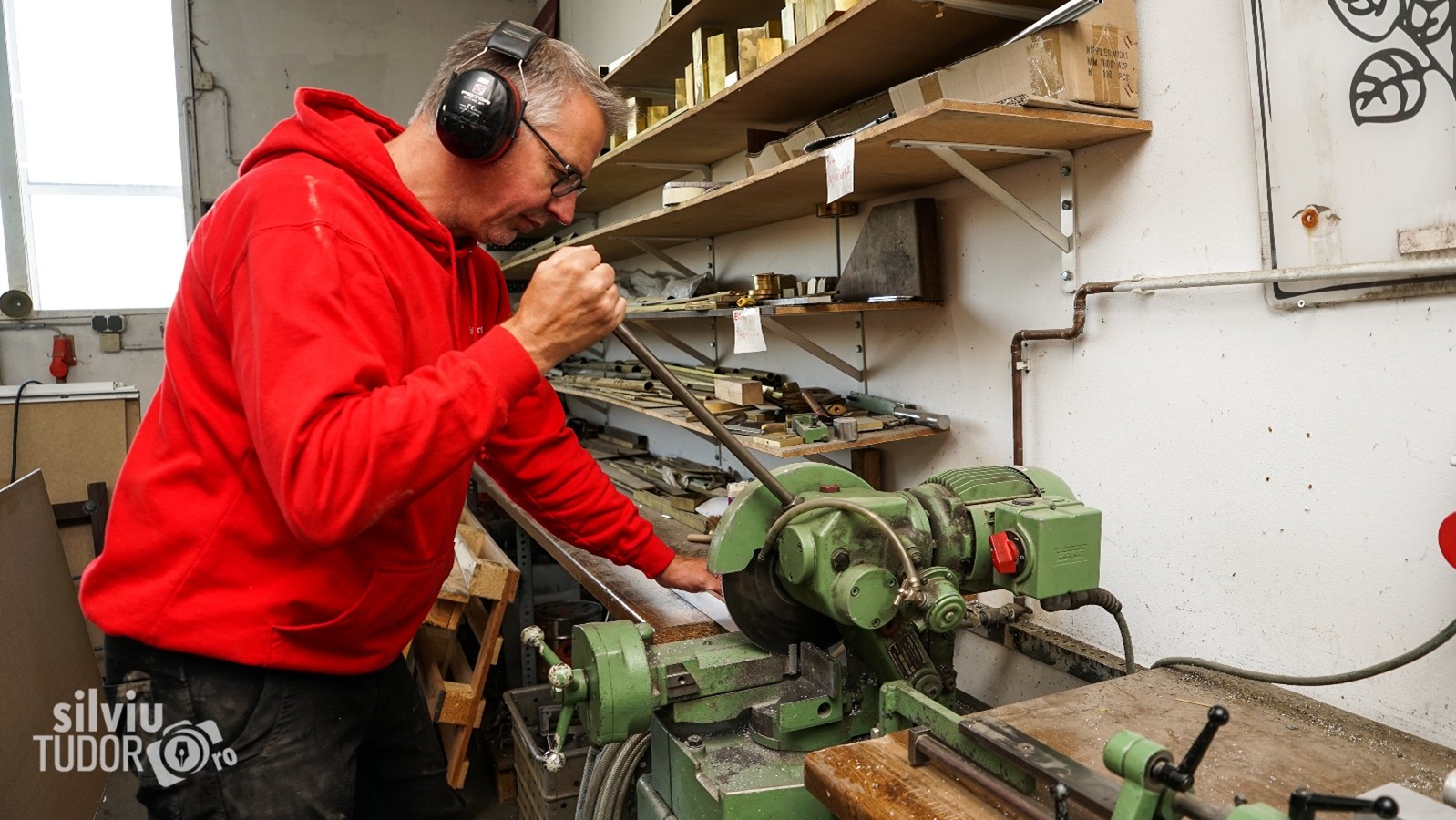
Stepping into the metalworks area of the ROSE-HANDWERK workshop, we can observe that this is where the metal parts of the R-H speakers are produced, especially those made of aluminum. Looking at them more closely, we can see that R-H speakers feature metal components on their rear panels, where the binding posts are located, but also specially crafted elements that surround the tweeters, rings for the drivers, or parts that make up the stands of the bookshelf speakers.
NINTH STOP: FINAL SANDING
Once the cabinet is fully defined, we move to the part that we woodworkers don’t particularly love, final sanding. This involves hours of manual work, because it simply cannot be automated. Especially since Markus works with solid wood, the final sanding is done almost entirely by hand.
Yes, you heard that right, literally with a piece of sandpaper in hand, you go over the entire cabinet, otherwise it just doesn’t come out right. This is how old-school woodworking is, and Markus does not shy away from it. But you see, dear reader, in the end this is what gives ROSE-HANDWERK speakers their soul, this sense of humanity that industrially produced speakers simply do not have.
Markus’ speakers are alive and, from my point of view, much of this sense of being alive comes from this final sanding stage, when Markus’ energy is captured and stored in the wood, wood has a memory and, if you let your imagination go far enough, when you listen to music on a pair of R-H speakers, you will undoubtedly feel it, a piece of Markus’ energy remains in every speaker he creates.
TENTH STOP: APPLYING THE FINISH
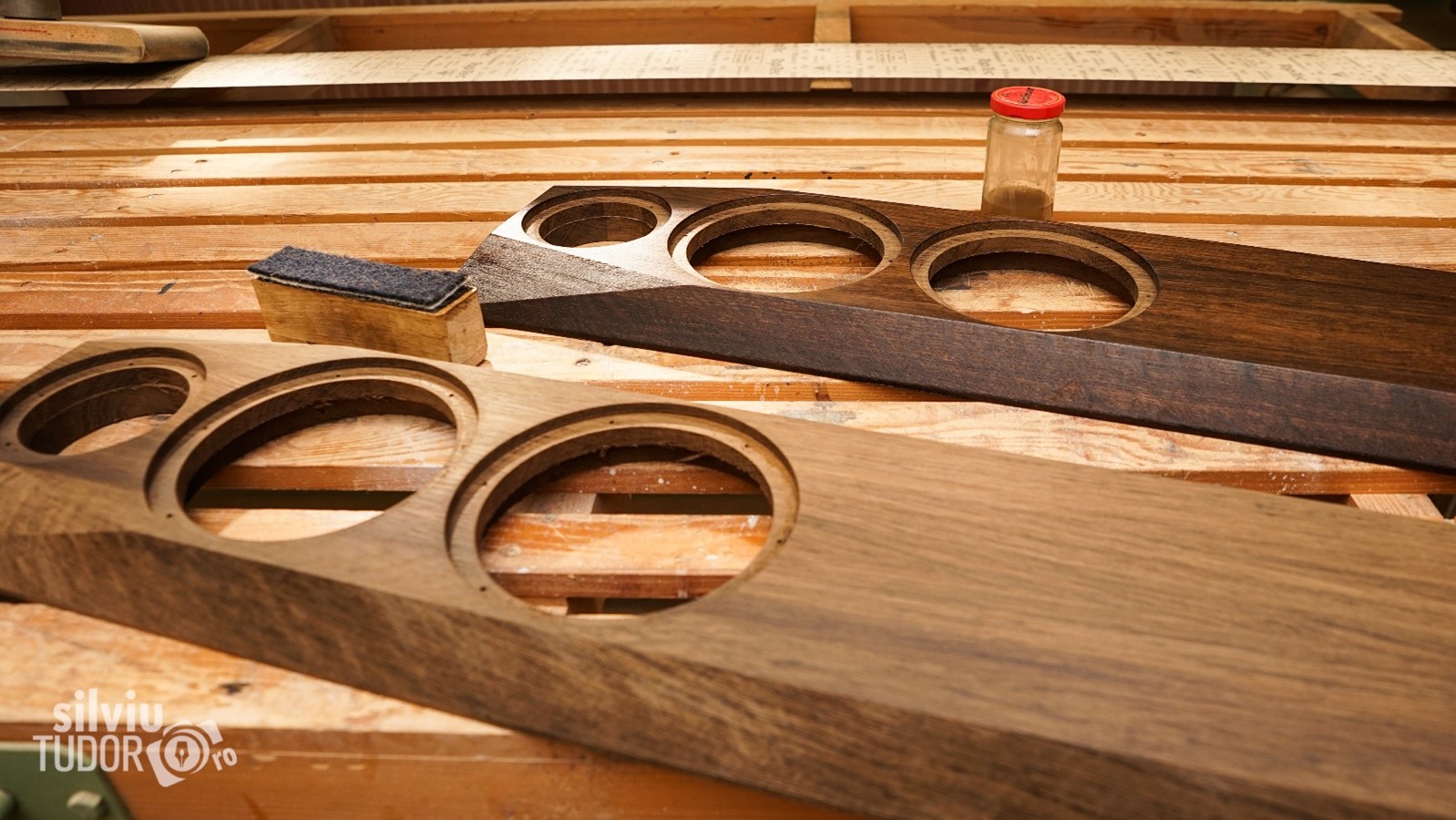
But now comes the most rewarding part of woodworking. When working with solid wood and you reach the finishing stage, when you actually apply the oil, that is truly the best part. You understand this only by doing, when you take a bit of oil on a small sponge and apply it to untreated wood, it almost comes alive, it awakens there, under your hands and before your eyes.
ELEVENTH STOP: SPRAY BOOTH
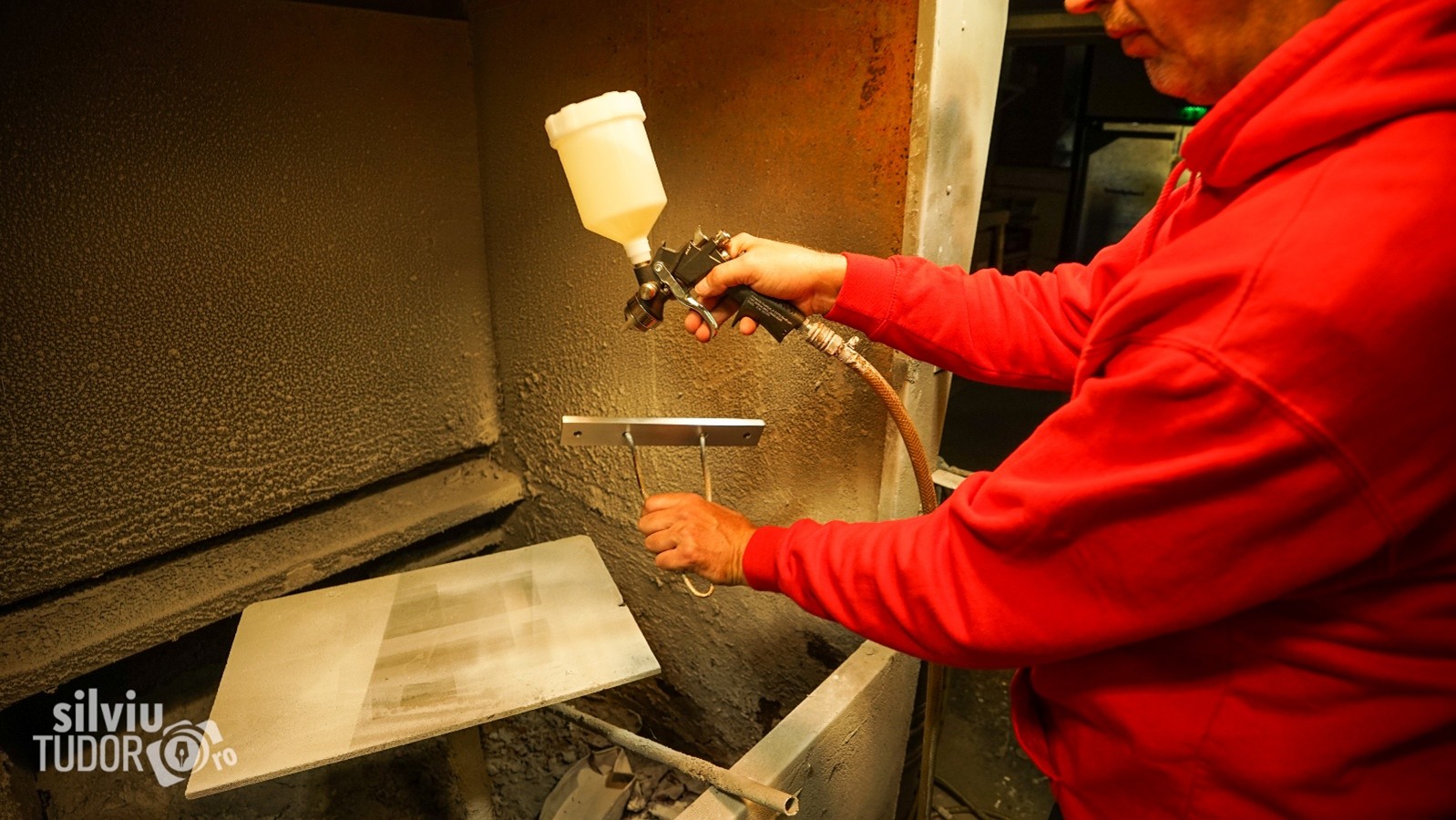
Being made of solid wood, Markus’ speakers receive an oil treatment, but metal parts, like aluminum, are lacquered in the dedicated spray booth located behind the ROSE-HANDWERK factory:
TWELFTH STOP: ELECTRONICS
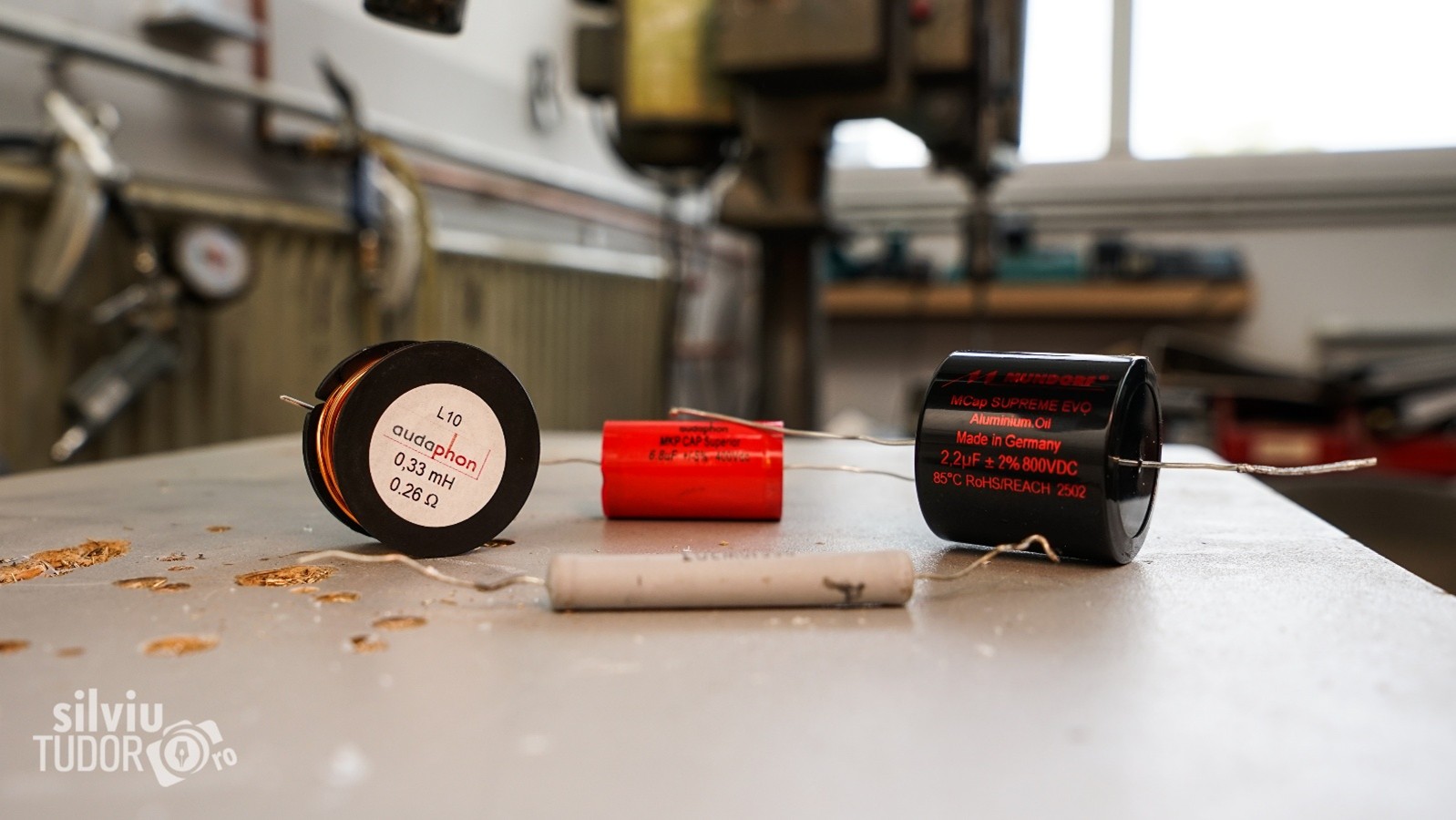
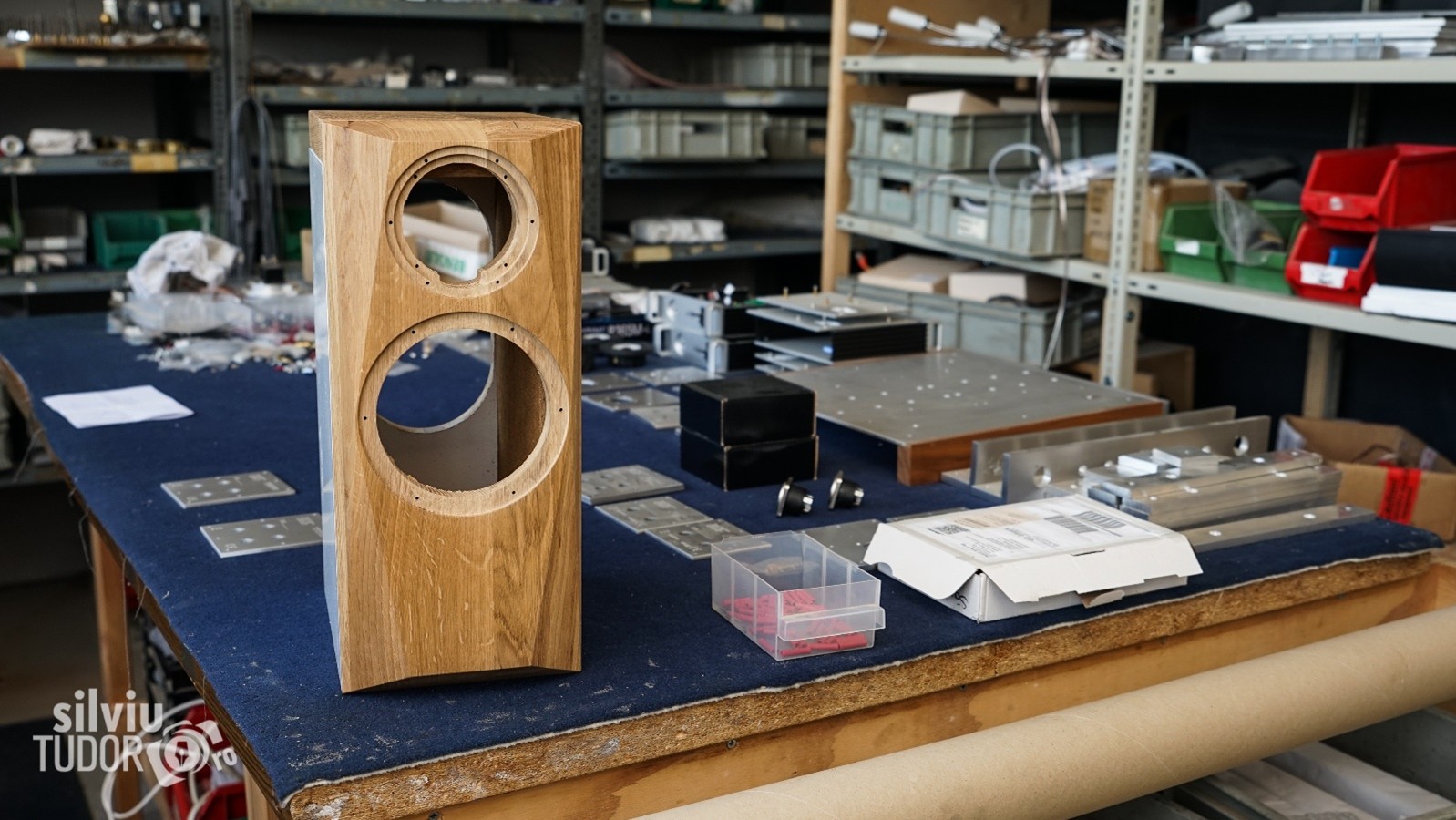
Once the cabinet is finished and fully dried, the drivers and the crossover electronics are installed, along with the binding posts and internal wiring. Markus has a dedicated room for this, where each speaker is completed.
THIS IS HOW A FINISHED PRODUCT LOOKS
Once the final assembly is complete, each pair of speakers goes into the ROSE-HANDWERK listening room for measurements. In a way, every pair of R-H speakers is unique and no pair leaves the factory until the measurements are perfectly satisfactory for Markus. Every pair passes through his hands, but also through his ears. That’s a different kind of quality control, isn’t it?
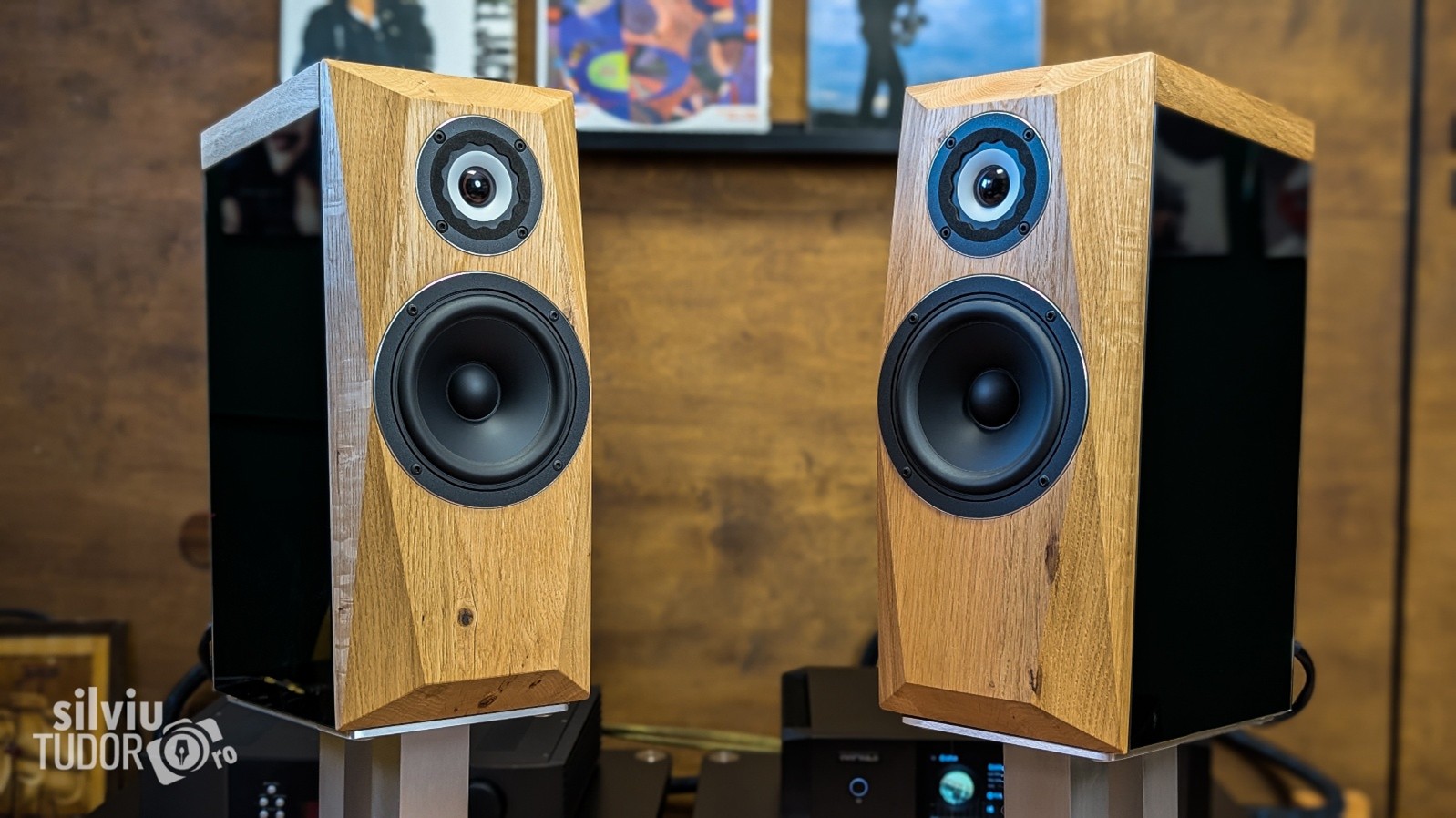
Below is an image of my own speakers, photographed in my listening room in Bucharest, so you can see what a finished ROSE-HANDWERK product looks like:
LOVE AND FAMILY – THE SECRET CONDIMENT OF ROSE-HANDWERK
Spending these few days at ROSE-HANDWERK, I realized that this is more than just an audio manufacturing place, it is unlike anything I had visited before. This is about Markus’ love for building speakers and for audio itself.
But his love does not stop at speakers and audio, this is about family, without which Markus could not have achieved all of this. It is hard for me to explain to you, dear reader, what a beautiful family I encountered at ROSE-HANDWERK, but I can honestly say that I admire them and that they are the best example I have of a family united through love.
I believe this is the unique ingredient that allows these speakers to exist, I believe that many conditions came together here, this wonderful location at the border between two villages, the history of the ROSE-HANDWERK company, the wonderful Daniela, the talented Elisabeth, dear Carsten, even the dog Ke, and of course, master Markus, without whom ROSE-HANDWERK speakers could not have existed.
Below I leave you an image of Daniela and Markus, photographed in front of ROSE-HANDWERK, with the factory on the left, their home on the right, with the showroom and offices forming a bridge between the two:
CONCLUSION
So, dear reader, do not miss a visit to the ROSE-HANDWERK factory and showroom, as well as their listening room. This entire experience feels very arcane, set in such a beautiful countryside, at the crossroads of two small towns you will find a modest industrial area which, from the outside, seems conventional, yet inside it hides an oasis that holds one of the best listening rooms I have ever experienced, along with a wonderful family that feels as if they have always been there and who will sincerely welcome you with open arms, something very rare nowadays, when not everything is what it seems, yet it appears that in this small green corner of Sauerland, sincerity still exists, along with deep passion, love and true talent.
Completely hand-made products are so rare nowadays, that it almost feels like a dream to own such a pair of speakers that were conceived from the brain of one man, put together in this true German oasis of tranquility and love. That, dear reader, is something really unique.
For those interested in how these speakers sound, contact Markus directly at markus-grelka.de if you are in western Europe or other parts of the world, but, for those of you who are in Eastern Europe or Romania, make sure to contact me directly, you can come by at any time and have a listen. For sure that’s where you will find me, always in front of my beloved Vitesse Wave.
If you’ve missed my previous articles about Rose-Handwerk, here they are:
COMPANY PROFILE: ROSE-HANDWERK – Solid Wood Speakers Built to Perfection in Germany
INTERVIEW: MARKUS GRELKA – The Speaker Artisan of ROSE-HANDWERK
GEAR REVIEW: ROSE-HANDWERK – Vitesse Wave – These Speakers Are Alive!
THE LISTENING ROOM EXPERIENCE: Rose-Handwerk, Sauerland, Germany
Silviu TUDOR
An article written in my sweet spot,
and this is what I’ve heard.